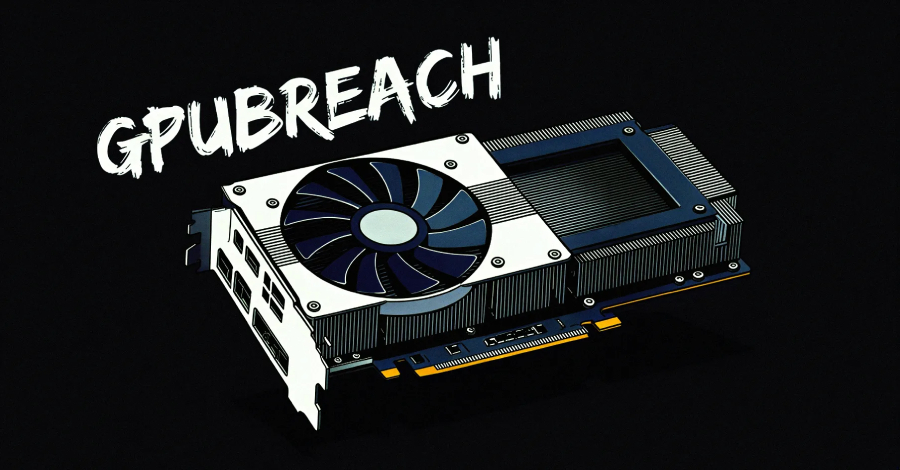
Bits flipping. Chaos erupting. An unprivileged app on your NVIDIA GPU just spawned a root shell, courtesy of GPUBreach.
Zoom out: Researchers from the University of Toronto dropped this bomb — a RowHammer attack tuned for high-end GPUs. Not just corrupting ML models. No. Full privilege escalation. CPU takeover. All while IOMMU watches, helpless.
NVIDIA’s been touting secure AI hardware for years. Laughable now.
Wait, RowHammer on GPUs? Isn’t That Old News?
RowHammer’s been kicking around since 2014 — that sneaky DRAM glitch where hammering one row flips bits in the next. CPUs got mitigations: ECC, TRR, the works. GPUs? They laughed it off. GDDR6 memory, massive parallelism — thought it was immune.
Enter GPUHammer last July. First real RowHammer on NVIDIA cards. ML accuracy tanked 80%. Annoying, but contained.
GPUBreach? It escalates. Corrupts GPU page tables. Arbitrary read/write on GPU memory. Then — boom — exploits NVIDIA driver bugs for kernel writes. Root shell. Game over.
“By corrupting GPU page tables via GDDR6 bit-flips, an unprivileged process can gain arbitrary GPU memory read/write, and then chain that into full CPU privilege escalation — spawning a root shell — by exploiting memory-safety bugs in the NVIDIA driver,” Gururaj Saileshwar, one of the authors, posted on LinkedIn.
Saileshwar’s team didn’t stop there. Bypasses IOMMU — that hardware cop keeping DMA in check. How? Corrupts driver state in IOMMU-approved buffers. Triggers out-of-bounds writes. Kernel pwned.
Cloud folks, take note. Multi-tenant GPUs? HPC clusters? This is your apocalypse.
And here’s my hot take — unique to this rag: Remember Meltdown/Spectre? Everyone patched frantically, then forgot. GPUBreach echoes that: hardware vendors promise isolation, software foibles undo it all. Bold prediction? By 2026, GPU rental platforms like Vast.ai will mandate ECC or die, pricing out small AI tinkerers.
Can GPUBreach Really Ignore IOMMU Protections?
Short answer: Yes. And it’s terrifying.
IOMMU’s job — isolate peripherals, block rogue DMA. Disable it? Attacks galore. But GPUBreach works with it on.
The trick: GPU DMA into its own permitted buffers. Flip bits there. Driver trusts that state — memory safety bugs let attackers overflow. Arbitrary kernel writes follow. Root shell pops like popcorn.
Concurrent papers pile on: GDDRHammer tweaks page table aperture for CPU memory r/w. GeForge needs IOMMU off, but still nasty. GPUBreach wins for sheer audacity.
“GPUBreach shows it is not enough: by corrupting trusted driver state within IOMMU-permitted buffers, we trigger kernel-level out-of-bounds writes — bypassing IOMMU protections entirely without needing it disabled,” Saileshwar added.
NVIDIA drivers riddled with these bugs? Shocking. Or not — memory safety’s the eternal Achilles’ heel.
Desktop GPUs lack ECC. Laptops too. No mitigations. Plug in a shady CUDA app, and you’re rooted.
Why Does This Gut Punch Cloud AI?
Picture this: Shared GPU instances powering your ChatGPT clone. Attacker rents a slice, hammers away. Steals crypto keys from cuPQC. Downgrades your model accuracy. Escalates to host control.
Researchers demoed it: Leaked secrets, poisoned ML, full compromise.
Corporate spin incoming — NVIDIA’ll say “enterprise cards have ECC.” Cute. But consumer cards? Data centers mixing workloads? Vulnerable.
ECC ain’t bulletproof anyway. ECCploit, ECC.fail — multi-bit flips laugh at it. Researchers warn: Two+ flips, and it’s silent corruption city.
So, what’s the fix? Firmware patches? Driver overhauls? TRR for GDDR6? Good luck retrofitting billions of cards.
History repeats: RowHammer’s evolved past every defense. GPUs are the new frontier — and they’re wide open.
NVIDIA, your PR team’s sweating. “Secure by design”? Design better.
The Other GPU Hammers in Town
GDDRHammer: Mods aperture field, reads/writes all host memory.
GeForge: Hits page directory, same hijack goal.
All RowHammer via GDDR6. All privilege escalations. GPUBreach just chains to CPU root.
Teams note differences — last-level PT vs PD0 — but endgame’s identical: GPU owns the box.
Temporary band-aid: ECC on. But desktops? Nada.
What Should You Do Yesterday?
Users: Update drivers. Avoid shady CUDA code. ECC if possible.
Cloud ops: Isolate tenants harder. Monitor hammering patterns.
Vendors: Rust-ify drivers? Hardware RowHammer refresh?
This ain’t hype. It’s a wake-up. GPUs aren’t sidekicks anymore — they’re the mainframe. Secure ‘em, or watch empires crumble.
**
🧬 Related Insights
- Read more: Leaked Cellebrite Matrix Names Pixel 6-9 Models Ripe for Hacking
- Read more: AI and Quantum Are Gutting Digital Trust — Time to Panic?
Frequently Asked Questions**
What is GPUBreach attack?
GPUBreach is a RowHammer exploit on NVIDIA GPUs using GDDR6 memory to flip bits, corrupt page tables, and escalate privileges to full CPU root access — even with IOMMU enabled.
Does GPUBreach affect consumer GPUs?
Yes, especially non-ECC desktop and laptop NVIDIA cards with no mitigations. Cloud and HPC setups are prime targets too.
How to protect against GPU RowHammer attacks?
Enable ECC where available, patch drivers, isolate workloads, and watch for anomalous memory access patterns — but no silver bullet yet.