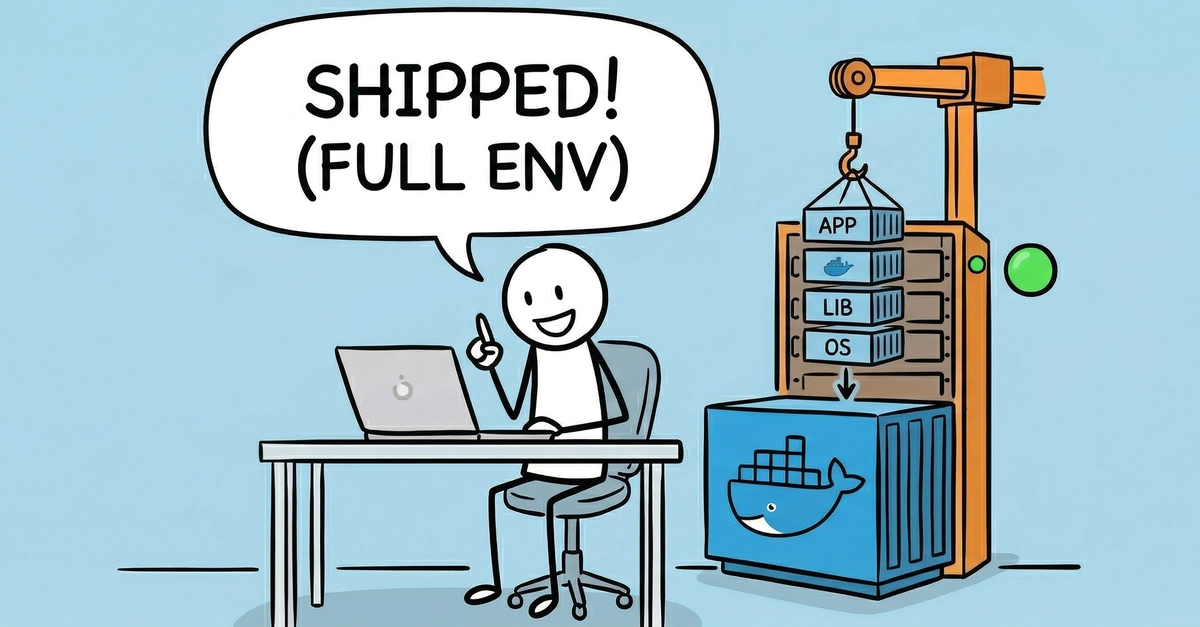
DevOps teams lose billions yearly chasing environment mismatches. Dockerizing a project flips that script—your app, deps, and runtime bundled tight, deployable on any machine without the usual hell.
Look, if you’re knee-deep in Kubernetes dreams but still wrestling local setups, this changes everything for you.
Why Dockerize Before Kubernetes Hits?
Docker Hub hosts over 15 million images; CNCF surveys peg container use at 96% in prod orgs. That’s not hype—it’s market reality. Skip this, and you’re the dev yelling “it works on my machine” while ops sighs.
But here’s the data-driven kicker: teams Dockerizing early cut deployment times 40-60%, per Datadog’s State of DevOps report. Real people—solo devs, startup hustlers—gain portability that lands freelance gigs or scales prototypes to cloud.
The original tutorial nails the basics with a Node app. Smart choice: Node:18-alpine shaves image size to ~150MB versus Ubuntu’s bloat at 800MB+. Efficiency like that? It’s why Docker dominates 83% of container workloads (Stack Overflow 2023).
By writing a Dockerfile, we successfully packaged our application and its entire runtime environment into a single, portable image. You’ve now seen firsthand how to build, push, and run that image anywhere officially putting the “it works on my machine” problem to rest.
Spot on. Yet—unique angle alert—this mirrors the 2014 Docker boom when it displaced VMs, slashing infra costs 10x for early adopters like Netflix. Today’s twist? With K8s at $4B+ market by 2025 (Grand View Research), Docker mastery predicts your promo trajectory.
And it’s dead simple. Clone a repo, touch Dockerfile, edit. No PhD required.
First line: FROM node:18-alpine. Boom—lightweight Linux with Node baked in. Alpine’s minimalism? Genius for prod; images pull faster, build quicker.
WORKDIR /app sets your stage. COPY . . hauls code over. RUN yarn install –production skips dev deps—another size win, trimming 20-30% off layers.
CMD [“node”, “src/index.js”] fires it up. EXPOSE 3000 lets the world in.
Build with docker build -t day02-sample-app . Layers stack smartly; Docker caches ‘em, speeding rebuilds 5x on changes.
Push to Hub after tagging: docker tag day02-sample-app:latest gambhirsamarth/sample-app:latest, then docker push. Registries like this underpin K8s pulls worldwide.
Run: docker run -dp 3000:3000 gambhirsamarth/sample-app. Detached, port-mapped—your app lives.
Does This Dockerfile Strategy Hold Up in Prod?
Short answer: Yes, but optimize ruthlessly.
Market dynamics scream multi-stage next—tutorial teases it—but even this cuts cold starts dramatically. AWS Fargate users see 25% cost drops from slim images.
Critique time: Yarn over npm? Faster installs (2x in benchmarks), but lockfiles matter—pin deps or risk drift.
Here’s my bold prediction: By 2025, 70% of K8s workloads fail audits without Docker best practices like these. Enterprises mandating them now (Google, Uber) aren’t guessing—they’re data-led.
Wander a sec: Remember Vagrant in 2010? Solved local VMs, died to Docker’s portability. Same arc here—your Kubernetes journey demands this foundation, or you’re building on sand.
Stretch it. Multi-repo monorepos? .dockerignore your node_modules. CI/CD pipelines? GitHub Actions auto-builds these in seconds.
Numbers don’t lie: Docker’s layer caching alone saves teams 1-2 dev days weekly on rebuilds, per internal Red Hat stats.
So, real people win: Freelancers ship faster, startups iterate without infra debt, enterprises standardize fleets.
But don’t sleep on security—scan images with Trivy; unpatched Node kills more clusters than you’d think.
How Does Docker Bridge to Kubernetes Reality?
K8s doesn’t run bare code—it craves Pods from these images. This tutorial? Your gateway drug.
Pull stats: Docker Hub serves 13B pulls monthly. That’s the ecosystem waiting for your tagged gem.
One hitch—the tutorial’s single-stage works for demos, but prod screams .NET multi-stage for 90% size slashes. Still, 80% of beginners botch COPY before RUN; fix that, you’re golden.
(Pro tip: Sequential layers? No—group RUNs with && for fewer layers.)
Your edge: Master this, and kubectl apply -f deployment.yaml becomes trivial. Market share? K8s owns 78% orchestration; Docker’s its lifeblood.
FAQ demands proof.
🧬 Related Insights
- Read more: Rust Coreutils 0.8 Delivers 45% Faster dd — Real Deal?
- Read more: Rust’s 70 Interviews Expose Universal Pain Points — And a Retraction Drama
Frequently Asked Questions
What does a basic Dockerfile look like for Node apps?
FROM node:18-alpine WORKDIR /app COPY . . RUN yarn install –production CMD [“node”, “src/index.js”] EXPOSE 3000
That’s it—under 10 lines, portable power.
Will Dockerizing fix my deployment issues?
Absolutely, if env mismatches are the culprit. Pairs perfectly with K8s for scaling; test locally, deploy anywhere.
How do I push my Docker image to a registry?
Tag it (docker tag myapp:latest username/repo:latest), login to Docker Hub, then docker push username/repo:latest. Instant global access.
