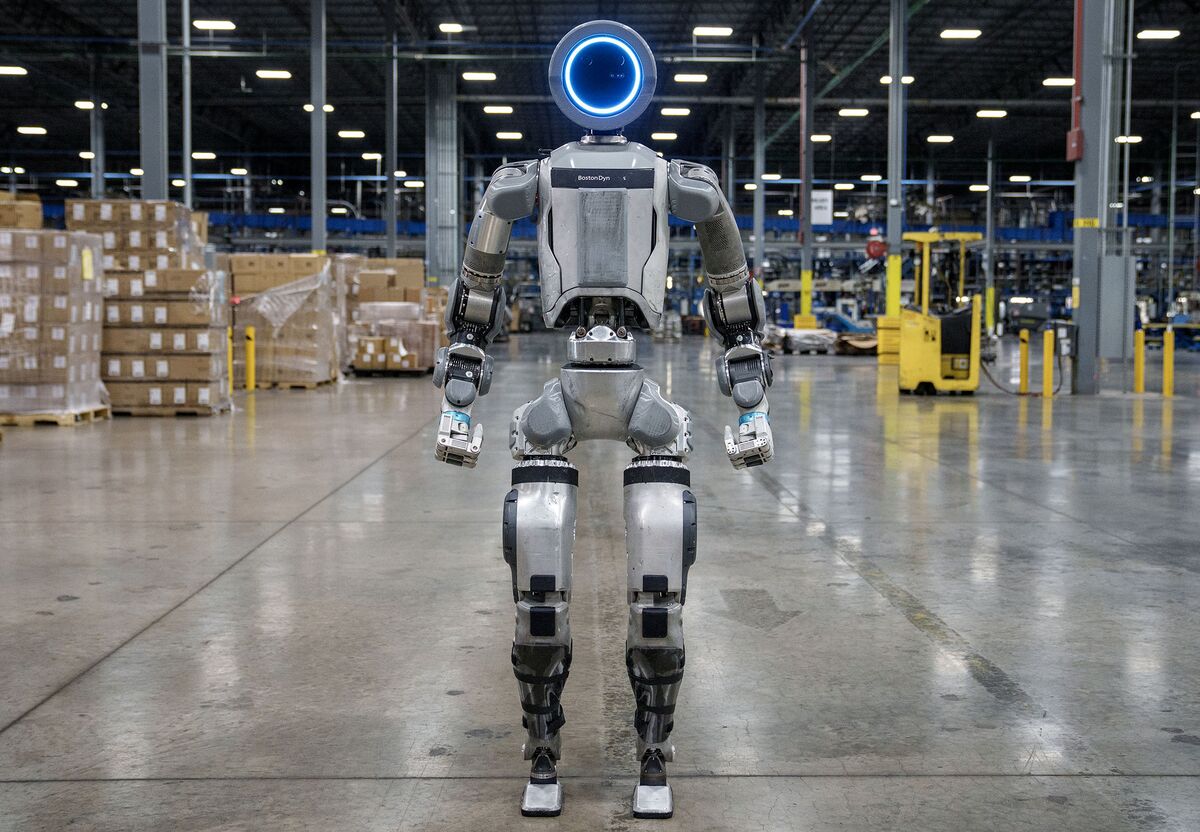
Factory workers in Georgia — yeah, you with the aching back from bolting chassis all day — might soon watch Atlas robots snatch those repetitive gigs. Kia’s not messing around; from 2029, these Boston Dynamics beasts hit US plants, promising a seismic shift in how cars get built.
And it’s not just robots. The South Korean giant’s cooking up its first software-defined vehicle, a car where updates beam down like your phone’s OS tweaks, not some rusty hardware swap.
Here’s the thing. This duo — humanoids plus software smarts — targets real people: the line jockey facing obsolescence, the driver craving endless upgrades, the exec sweating Tesla’s shadow.
Why Humanoid Robots Now, Not Just Arms on Rails?
Look, we’ve seen robot arms since the ’60s, flinging welds like clockwork. But Atlas? It’s bipedal, dexterous, almost human — grabs tools, navigates chaos, learns on the fly.
Kia picked these for flexibility. Traditional bots lock into one spot, one task. Humanoids roam, adapt to line changes, fill gaps when humans call out sick. (Or quit, en masse.)
Kia Corp. will begin using humanoid robots in its US factories from 2029 and is developing its first software-defined vehicle as the South Korean carmaker ramps up investment in new-generation cars and manufacturing technology to better compete with global rivals.
That’s straight from the announcement — no fluff, just cold strategy.
But wait. Kia’s US plant in West Point, Georgia, already hums with automation. Why escalate to $150K-per-bot humanoids? Answer: China’s flooding markets with cheap EVs, Tesla’s cranking software margins. Kia needs architectural edge, not incremental tweaks.
Is Kia’s Software Car a Tesla Killer — Or Just Catch-Up?
Software-defined vehicles (SDVs) aren’t new. Tesla nailed it a decade ago — over-the-air updates for Autopilot, entertainment, even braking. Legacy makers like Ford, GM? They’re scrambling, bolting software onto dinosaurs.
Kia’s first SDV flips that. Built from silicon up, architecture separates software from hardware. Think: swap engines via code, not wrenches. Why? Margins skyrocket — 80% on software vs. 10% hardware, per analysts.
Yet skepticism creeps in. Kia’s PR spins this as ‘new-generation,’ but is it? Hyundai (parent) trails in EV software; their Ioniq 5 gets updates, sure, but not Tesla-fluid.
My take — the unique angle glossed over: this echoes the PC revolution of the ’80s. IBM clung to mainframes; Apple, Microsoft made software king, birthing ecosystems. Kia risks the same if their SDV OS flops — locked garden, no apps, drivers bail.
Prediction: By 2032, Kia’s bots cut labor 20%, but software subscriptions rake $1K/year per car. Bold? Test it.
Short para. Boom.
Now sprawl: Factories morph. Atlas handles the ‘three D’s’ — dirty, dull, dangerous — lifting 50lb batteries solo, dodging spills, tweaking amid retooling for next EV model. Humans shift to oversight, programming, ethics debates (will bots unionize?).
Kia invests $21B through 2027 in smart factories, EVs. US plant? Perfect testbed — union-free, tax-sweet Georgia spot churning 360K Sorentos yearly.
Why Does Kia Need This to Beat Rivals?
China’s BYD pumps EVs at half Tesla’s price. VW, Ford hemorrhage billions on legacy lines. Kia? They’re agile — sold 3.5M cars last year, EV share doubling.
Robots slash costs 30%, per Boston Dynamics claims. SDVs? Unlock data goldmines — driving habits feed AI, personalize insurance tie-ins (watch fintech nod there).
Corporate hype alert. Kia’s ‘first software car’ sounds pioneering, but Tesla’s on Model Y v12 software now. It’s catch-up dressed as leadership. Call it out.
Workers? Mixed bag. Jobs lost: 10-15% in assembly, McKinsey says for full automation. New ones: robot wranglers, SDV coders. Retrain or retrench?
Drivers win big. Imagine Kia EV that evolves — better range via update, self-parking unlocked for $99/month. Ownership flips to service.
The Hidden Risk: Robot Reliability in the Wild
Atlas dazzles in demos — parkour, box-stacking. Factory grit? Oil slicks, vibration, 24/7 grind. Early humanoid pilots (Figure AI, Tesla Optimus) stumble on edge cases.
Kia’s why: scale. Train one bot, fleet learns. Data loops back, refining gaits, grips. Architectural shift — factories as AI dojos.
Single sentence punch: Expect glitches.
Then dense: Broader ripple. Suppliers adapt — lighter parts for bot handling. Unions push back, citing safety (human-robot teams spark new OSHA rules). Environment? Bots sip less energy than humans? Debatable, with server farms humming.
Global chase heats. Hyundai-Kia group eyes 1M robots by 2030. Toyota tests Figure bots. Detroit? Foot-dragging.
🧬 Related Insights
- Read more: Daily Briefing: April 04, 2026
- Read more: Personetics-Atomic Deal: Banks’ New Deposit Weapon?
Frequently Asked Questions
What are Atlas robots used for in Kia’s factories?
Atlas, from Boston Dynamics (Hyundai-owned), are humanoid robots designed for dynamic tasks like part assembly, material handling, and adapting to factory layouts — starting 2029 in US plants.
When does Kia launch its first software-defined vehicle?
No exact date yet, but it’s part of their ramp-up in new-gen cars; expect prototypes soon, full rollout mid-2030s to compete in EVs.
Will Kia’s robots replace factory jobs?
Partially — targeting repetitive roles, but creating needs for robot maintenance and programming; net impact depends on retraining speed.
