UK muscle meets AI ambition.
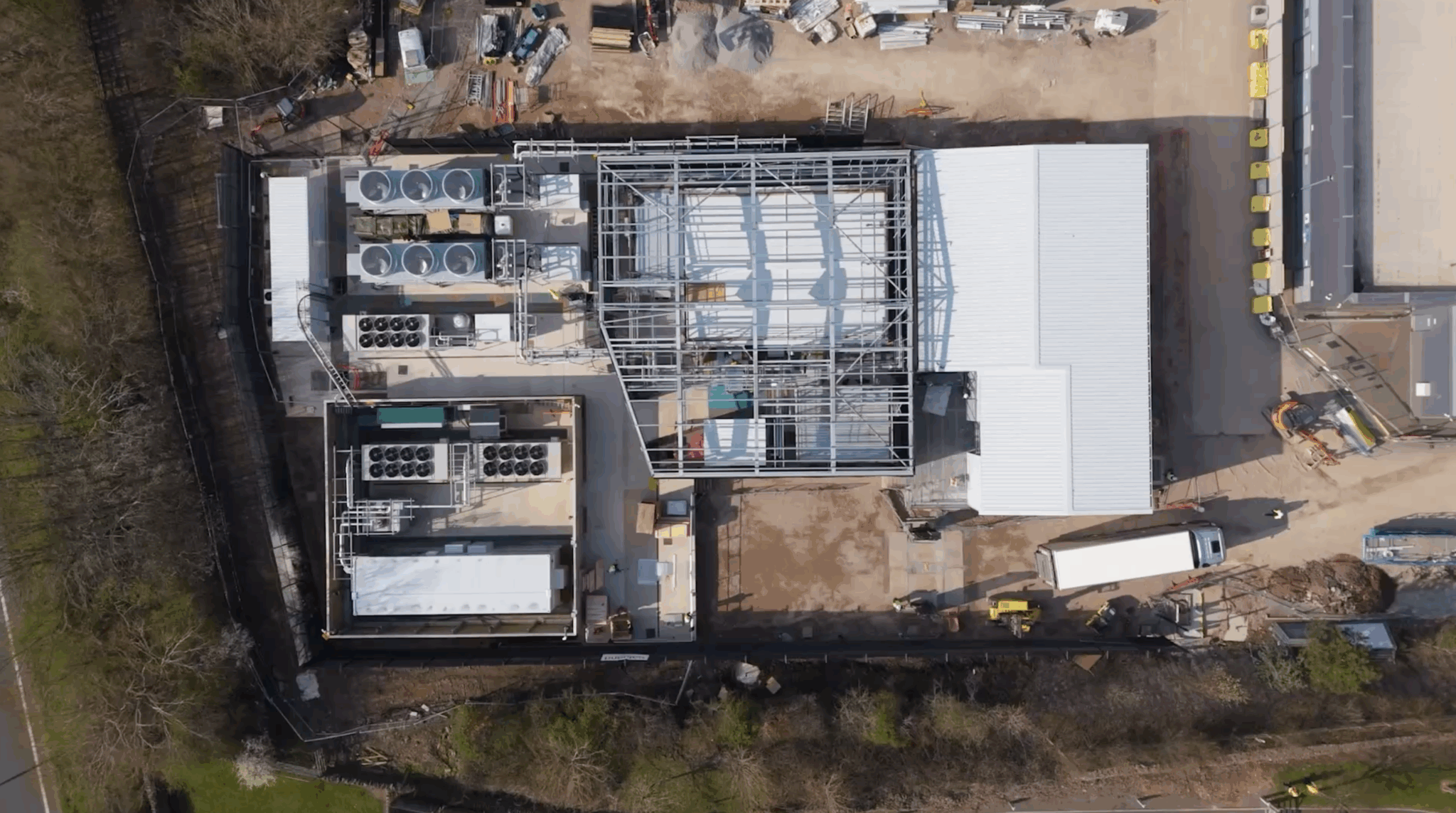
Isambard-AI roared to life yesterday at Bristol’s supercomputing hub, a beast packing more punch than anything the Brits have cooked up before. Picture this: 280 NVIDIA H100 GPUs per node, scaling to exascale dreams, all humming in a data center slapped together in 48 hours. It’s not hype—it’s hardware reality, backed by £225 million from the government purse.
And here’s Peter Kyle, the Secretary of State, hitting the big red button with a crowd of academics and HPE execs watching.
“And as we press this switch to activate the UK’s most powerful supercomputer, we are embarking on Britain’s super future where AI contributes towards the delivery of better public services, greater public prosperity, deeper scientific discovery and stronger national security.”
Bold words. But do the specs deliver?
How Did They Build a Supercomputer in Half the Time?
Speed. That’s the secret sauce—or processor, as they call it.
Simon McIntosh-Smith, BriCS director, nailed it: “We treated the project like a high-performance processor. We executed everything in parallel.”
Teams didn’t wait in line. Design overlapped with procurement; construction crews poured concrete while NVIDIA shipped racks. Modular data center? Pre-fab units trucked in, plugged like Lego. Forty-eight hours from empty lot to cooled servers. Compare that to the usual multi-year slog—Isambard-AI laughs at it.
It’s green too. Liquid cooling slashes energy draw by 30%, powered partly by renewables. In a world choking on AI’s power hunger (looking at you, data centers guzzling more than small countries), this matters. Architectural shift? Absolutely. From monolithic builds to parallel everything, echoing Brunel’s railway frenzy but with chips instead of iron.
My take: This isn’t just fast deployment—it’s a blueprint for how nations catch up in the AI arms race without waiting a decade.
Early jobs already churning: protein folding for drugs at Oxford, weather wildcards via the Met Office, even net-zero fusion pushes. Startups get a slice too, not just the Oxbridge elite.
Why Name It After a Victorian Engineer?
Isambard Kingdom Brunel—railways ripping through hills, massive ships defying oceans. Nineteenth-century audacity.
Today? Same vibe for silicon. UK nods to its engineering DNA, ditching Silicon Valley envy for homegrown scale. But here’s my unique angle: Brunel’s Great Western Railway overpromised gauges, faced overruns, yet redefined Britain. Isambard-AI risks the same—hype meets reality. Will its exascale tease (Phase 2 looms) deliver Brunel-level transformation, or fizzle like some legacy projects?
Skeptical? Fair. Global leaderboard has US Frontier at 1.2 exaflops, Japan’s Fugaku trailing. Isambard-AI Phase 1 hits ‘hundreds of petaflops’—impressive for UK, but no world topper yet. Still, sovereign compute means no begging AWS for AI scraps.
Access? DSIT and UKRI gatekeep, prioritizing national wins: healthcare AI, defense sims, climate hacks. Smaller unis and firms apply via portals—democratizing in theory.
Can Isambard-AI Challenge US and China AI Dominance?
Short answer: Not alone. But stack it with the UK’s AI Safety Institute, skills bootcamps, and this coordinated push—suddenly, Britain’s no also-ran.
Why now? China hoards chips; US export controls bite. UK carves a middle path: NVIDIA partnership (pre-ban vibes), HPE muscle, Bristol brains. Architectural why: Liquid-cooled racks handle H100s’ heat, paving for Blackwell upgrades. Prediction—bold one: By 2026, modular Isambard spawns regional mini-clusters, flooding Europe with UK-led AI infra. Corporate spin calls it ‘leadership’; I call it smart catch-up.
Projects hint at depth. Drug discovery? Folding proteins faster than your laptop dreams. Net zero? Simulating carbon capture at scales labs can’t touch. National security? Classified, but wink-wink, cyber and drone swarms.
Critique the PR: ‘Once-in-a-generation leap’ sounds good, but UK’s compute lag was self-inflicted—Brexit brain drain, underfunding. This fixes it, aggressively.
Look, governments love ribbons. But Isambard-AI’s parallel ethos—build fast, iterate—mirrors software dev. Hardware catching agile? Game on.
And the green angle isn’t fluff. With AI’s carbon footprint exploding, Bristol’s setup (PUE under 1.1) sets a bar. Others will copy.
🧬 Related Insights
- Read more: Attention Variants Mapped: Efficiency Wars in LLMs
- Read more: Vector Databases: The Cosmic Map Turning AI’s Fuzzy Dreams into Laser-Focused Reality
Frequently Asked Questions
What is Isambard-AI supercomputer?
UK’s top AI rig, NVIDIA H100-packed, for research in drugs, climate, security—built in Bristol, live now.
How powerful is Isambard-AI?
Hundreds of petaflops now; exascale targeted. Tops UK charts, global mid-pack.
Who can use Isambard-AI?
Researchers, startups, biz via UKRI/DSIT—national priority first.