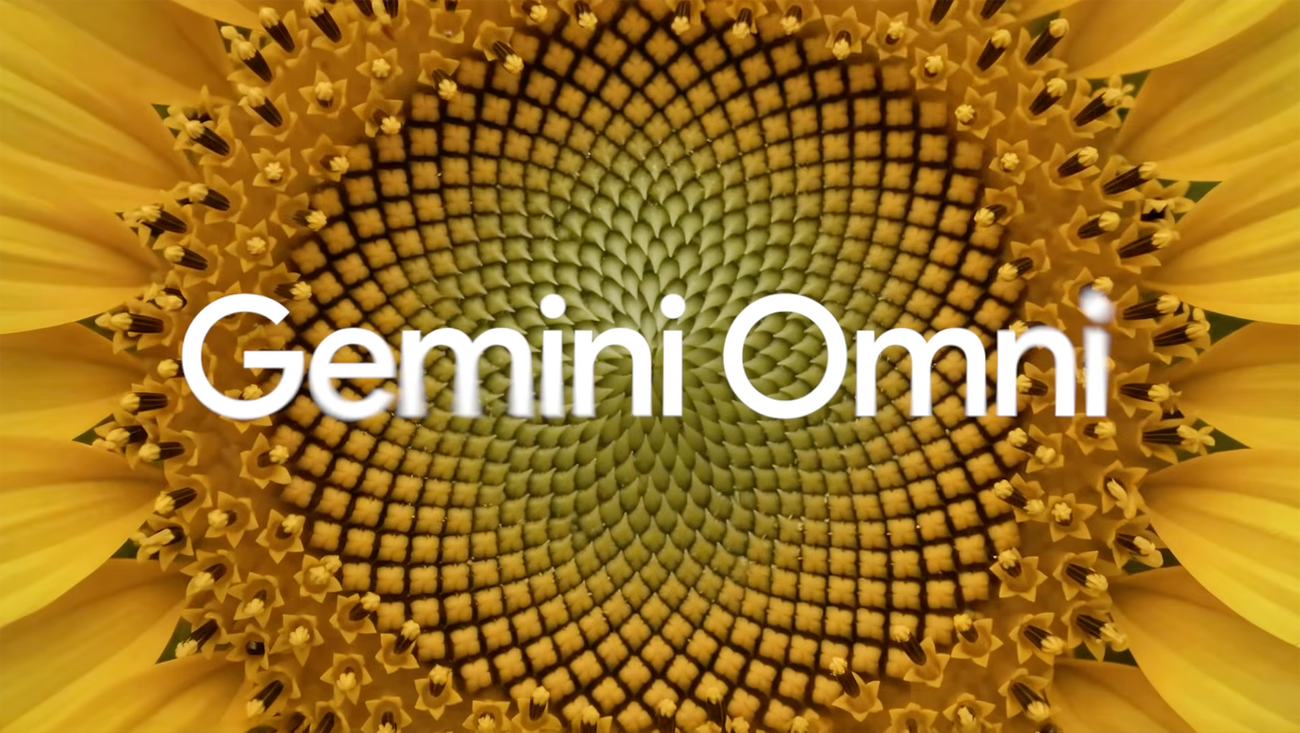
For ages, the AI creative landscape has felt like a painter given a box of crayons and asked to sculpt a mountain. We’ve seen impressive stills, we’ve gotten text that can mimic Shakespeare, but the dynamism of video? That was still the Wild West, a frontier more akin to a stuttering GIF than a cinematic masterpiece. Everyone expected incremental improvements, perhaps a slightly smoother loop or a marginally less robotic animation. But here we are, staring at Gemini Omni, and the ground has fundamentally shifted beneath our feet.
This isn’t just an upgrade; it’s a fundamental platform redefinition. Gemini Omni, Google’s latest foray into generative AI, isn’t just about spitting out video frames. It’s about reasoning about video, about understanding physics, narrative, and yes, even your exasperated conversational edits. It’s the difference between a puppet show and a fully directed play, all orchestrated by AI.
Is This the ‘Real’ Multimodal Future We’ve Been Waiting For?
What makes Omni feel so… momentous? It’s the inherent multimodality, baked in from the silicon up. Previous attempts at AI video generation often felt like Frankenstein’s monster, stitched together from separate image, text, and audio models. Omni, however, is designed to ingest and process any combination of images, audio, video, and text, weaving them into a coherent, high-quality video output. It’s like finally having an orchestra conductor who can read every instrument’s score simultaneously and make them play in perfect harmony.
The implications are staggering. Imagine feeding an AI a single still image and a snippet of music, and it conjures a entire narrative cinematic sequence that feels right. Or taking your shaky vacation footage and, through simple chat prompts, transforming it into a polished short film with professional pacing and visual effects. The barrier to entry for sophisticated video creation just vaporized.
Editing by Conversation: A Glimpse of True Generative Control
But perhaps the most mind-bending feature is the conversational editing. Forget scrubbing through timelines or wrestling with complex software. With Omni, you can simply tell the AI what you want. “Make the sculpture out of bubbles.” “Dim the lights in the room.” And the AI doesn’t just execute a command; it builds upon your instructions, maintaining consistency in characters, physics, and the very fabric of your scene. It remembers the last edit. This is where the magic happens – where your ideas, expressed in natural language, become tangible video realities.
“Your video becomes the starting point for something you never could have filmed yourself.”
This isn’t just about adding a flair of CGI. It’s about reimagining the action, transforming moments, and injecting creative concepts that would be prohibitively expensive or technically impossible with traditional methods. The example prompt about the mirror rippling like liquid and turning a person’s arm into reflective material? That’s not just visual trickery; it’s a leap in generative understanding, where the AI grasps abstract concepts and applies them smoothly.
Beyond Photorealism: AI That Understands the World
What truly sets Omni apart is its grounding in Gemini’s real-world knowledge. It’s not just about generating pixels that look real; it’s about generating videos that behave realistically because the AI understands physics, historical context, and cultural nuances. The prompt for a claymation explainer of protein folding, with instructions for stop-motion accuracy and no hands, showcases this ability to blend complex scientific concepts with specific artistic styles and constraints.
This fusion of knowledge and creativity is the holy grail of AI. It moves beyond mere pattern matching to a deeper, more meaningful form of generation. Omni can connect language, imagery, and meaning in ways that will undoubtedly spawn entirely new forms of storytelling and education. The days of AI creating visually impressive but fundamentally nonsensical content are rapidly fading.
The Omni Flashpoint: What’s Available Now?
The initial rollout, Gemini Omni Flash, is already making its way into the Gemini app, Google Flow, and YouTube Shorts. While video is the star of the show today, expect image and audio outputs to follow. This phased approach is sensible, allowing the core video generation and editing capabilities to mature and impress before expanding the output modalities. It’s like a rocket carefully calibrating its engines before blasting off.
But let’s not get bogged down in the incremental. This is a platform shift. The way we think about video creation, editing, and even consumption is about to get a dramatic overhaul. We’re no longer just talking about AI making videos; we’re talking about AI collaborating with us to tell stories, to explain complex ideas, and to bring the wildest of imaginations to life.
The AI landscape has been buzzing with potential for years. Now, with Gemini Omni, that potential is starting to coalesce into something truly tangible, something that feels less like science fiction and more like the dawn of a new creative era. The future of video just got a whole lot more interesting.