What if the most ambitious semiconductor play of the decade isn’t really a startup story at all—but a desperation move by a legacy chipmaker wearing a disruptor’s mask?
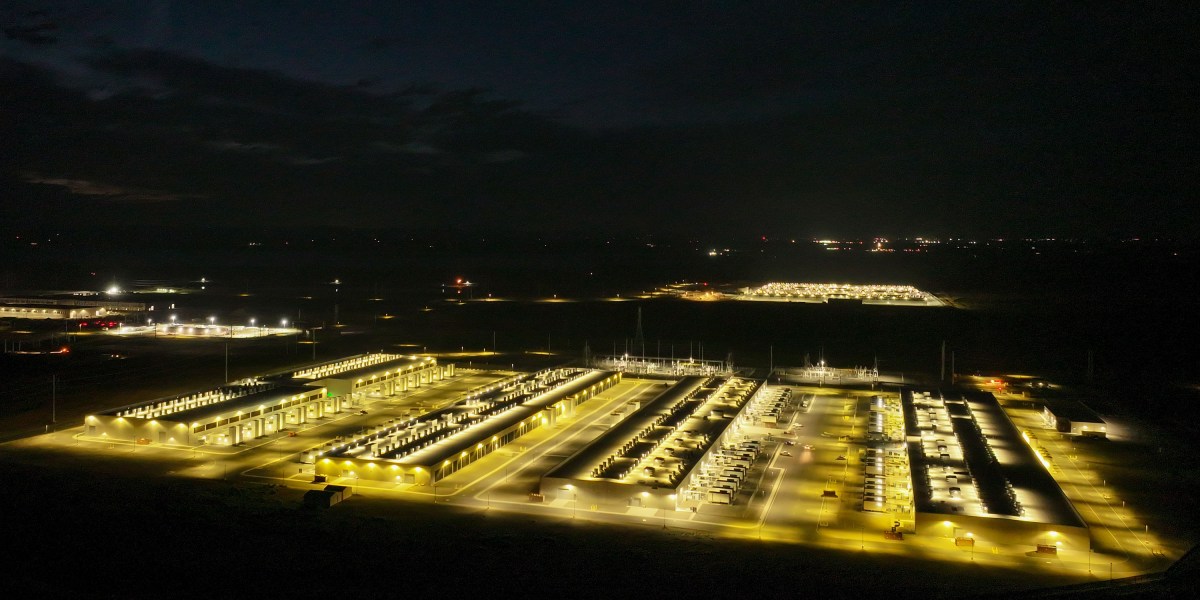
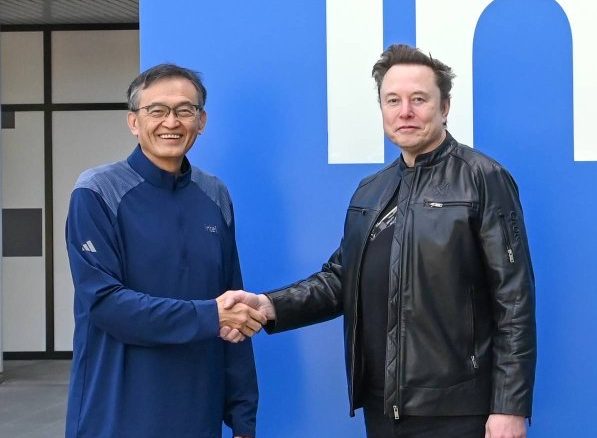
That’s the uncomfortable truth buried inside Intel’s quiet announcement this week that it will join Elon Musk’s Terafab project to build a new U.S. semiconductor factory in Texas. On the surface, it looks like a win-win: Intel gets anchor customers for its struggling foundry business. SpaceX and Tesla get production capacity for their AI chips. Everyone smiles. Stock price ticks up 3%. Done.
But look closer, and you’re watching an industrial reckoning play out in real time.
When Disruption Needs a Crutch
Let’s rewind to March 2024, when Musk announced the Terafab collaboration with typical maximalist flair: SpaceX and Tesla would design and manufacture chips for AI compute, satellites, space data centers, and autonomous vehicles—all in-house, all at scale. The implication was clear. Two of the world’s most operationally ruthless companies would do what the semiconductor establishment said was impossible: build a fab faster, smarter, cheaper.
It was a seductive narrative. Musk’s companies have a track record of cutting through industry orthodoxy. Why should chip manufacturing be different?
Then reality showed up.
Fab construction is not like rocket engines or electric drivetrains. You can’t iterate your way out of a $20+ billion, multi-year cleanroom infrastructure project through sheer will and engineering audacity. It requires, well, someone who’s actually built fabs before. Enter Intel—which has been hunting for anchor customers to save its foundry division from irrelevance.
“Our ability to design, fabricate, and package ultra-high-performance chips at scale will help accelerate Terafab’s aim to produce 1 TW/year of compute,” Intel said in a corporate post on X.
Notice what Intel didn’t say: that SpaceX and Tesla would be leading this. They buried the lede so deep it might as well be in the mantle.
The Unsexy Truth About Building Fabs
Semiconductor manufacturing is one of the last sectors where brute-force disruption actually runs into hard limits. You can’t disrupt lithography tools—ASML manufactures them, and there’s a 2-3 year waitlist. You can’t disrupt the precision required to carve features measured in nanometers. And you can’t disrupt the permitting, zoning, and supply chain coordination that takes years before a single silicon wafer touches a machine.
Musk’s companies excel at vertical integration and operational velocity. But neither has ever managed a cleanroom with 10,000 workers, nor navigated the Byzantine relationships with suppliers that keep a fab humming. Intel has.
So what we’re really looking at is Intel—a company that’s lost the design race to Nvidia and AMD, that bet on its own manufacturing prowess and got humbled—using SpaceX and Tesla as anchor customer cover to justify a $20 billion state-subsidized factory.
Which, granted, is smart strategy. But it’s not disruption. It’s rescue.
Why This Matters for the Chip Supply Chain
If you believed Terafab would pioneer some radically new manufacturing paradigm—maybe leveraging SpaceX’s supply chain expertise or Tesla’s operational discipline to compress timelines—you should adjust your expectations downward. This is now a traditional Intel foundry play with two marquee customers and federal backing.
That’s not inherently bad. The U.S. needs domestic chip manufacturing capacity. The CHIPS Act subsidies are genuinely important for national security and supply chain resilience. And Intel’s expertise is real.
But it also means Terafab won’t be a testbed for manufacturing innovation. It will be Intel’s playbook executed with Tesla and SpaceX footing part of the bill.
The strategic question isn’t whether this works—it probably will. It’s whether the market needed Intel’s particular approach, or whether this deal is just the establishment absorbing potential disruption by making itself indispensable.
Will This Actually Save Intel’s Foundry Business?
Intel’s stock jumped 3% on the news, which tells you investors see this as a positive signal. And it is: locking in SpaceX and Tesla as customers provides revenue certainty for a foundry division that has struggled to attract business against TSMC and Samsung.
But here’s the catch. Intel’s node technology is still trailing TSMC’s cutting edge. It’s still expensive. And now it has only two anchor customers instead of many. If either SpaceX or Tesla decides to shift sourcing—or pivots to fabless design—Intel’s investment thesis gets shakier fast.
Moreover, there’s a timing problem. The fab won’t be operational for years. Musk runs companies on Internet time. When Terafab actually starts producing chips, will SpaceX and Tesla’s product roadmaps even still align? Or will they have already solved their chip supply problems through other means?
What This Signals About Tech’s Power Dynamics
The real story here isn’t about semiconductors. It’s about which sectors still require boring, capital-intensive expertise—and which don’t.
Musk proved you can disrupt autos (Tesla), rockets (SpaceX), and payments infrastructure (kind of, with X). But he can’t disrupt fabs. Not alone. So he partnered with Intel, the establishment player, and told the market it was a bold new venture.
It works. It should work. But don’t confuse competence with vision. This is a financial engineering play dressed up as manufacturing innovation.
For Intel, it’s a lifeline. For SpaceX and Tesla, it’s a hedge against chip shortages. For the U.S., it’s securing onshore manufacturing capacity. All rational. None of it game-changing.
The real disruption in chips is happening elsewhere—in design (Cerebras, Groq), in packaging (3D chiplets), in software-defined everything. Manufacturing? That’s still the unglamorous, capital-intensive, partnership-dependent game it’s always been.
Intel just proved that again.
🧬 Related Insights
- Read more: 83% of Americans Say Keep Humans in Charge: The Pro-Human AI Declaration That Spans Left and Right
- Read more: EU’s GPAI Code of Practice: Toothless Guidelines or Clever Stopgap?
Frequently Asked Questions
What is Terafab and why does it matter? Terafab is a joint effort between SpaceX, Tesla, and now Intel to build a semiconductor factory in Texas capable of producing 1 terawatt per year of compute for AI and autonomous systems. It matters because the U.S. wants to reduce dependence on Taiwan for chip manufacturing, and because Musk’s involvement suggested a radically different approach to fab construction. Intel’s involvement signals that approach is now much more conventional.
Will Intel actually build this factory faster or cheaper than traditional fabs? Probably not. Intel will use its standard playbook, which takes years and costs $20+ billion. The “disruption” angle was marketing. What changes is that SpaceX and Tesla have locked in customers and federal subsidies to offset costs, making the project more financially viable than a pure Intel foundry play.
Does this hurt or help Intel’s stock price long-term? Short-term help (3% pop on announcement), but longer-term it’s a question mark. Intel gains revenue certainty but is locked into serving two powerful, unpredictable customers who could change direction. The real test is whether the foundry business actually becomes profitable, which depends on competing against TSMC—a battle Intel has been losing.