Bill Dally strides onto the GTC stage, mic in hand, eyes gleaming under San Jose spotlights — and drops a bombshell about the next leap in AI brains.
Zoom out. This isn’t just any talk. It’s the heartbeat of NVIDIA Research, that shadowy powerhouse of 400 global wizards who’ve been quietly engineering the guts of modern AI since 2006. Think of them as the mad scientists in a blockbuster — concocting CUDA, real-time ray tracing, and the silicon sorcery powering your ChatGPT dreams — all while dodging the trap of ivory-tower irrelevance.
Dally, ex-Stanford chair and NVIDIA’s chief scientist, nails it:
“We make a deliberate effort to do great research while being relevant to the company,” said Dally, chief scientist and senior vice president of NVIDIA Research. “It’s easy to do one or the other. It’s hard to do both.”
And here’s my hot take, one you won’t find in NVIDIA’s glossy decks: this setup echoes Bell Labs in its 1950s heyday, when transistor wizards didn’t just publish papers — they rewired the world. But NVIDIA’s cranking it to 11, predicting a platform shift where accelerated computing becomes as ubiquitous as electricity, birthing not just tools, but entirely new species of intelligence.
Short paragraphs hit hard. Like this one.
How NVIDIA Research Picks Its Moonshots?
They chase ‘risk horizons’ — projects too hairy for product teams, with payoffs that could eclipse the sun. David Luebke, VP of graphics research and NVIDIA’s OG researcher, puts it bluntly:
“We are a small group of people who are privileged to be able to work on ideas that could fail. And so it is incumbent upon us to not waste that opportunity and to do our best on projects that, if they succeed, will make a big difference.”
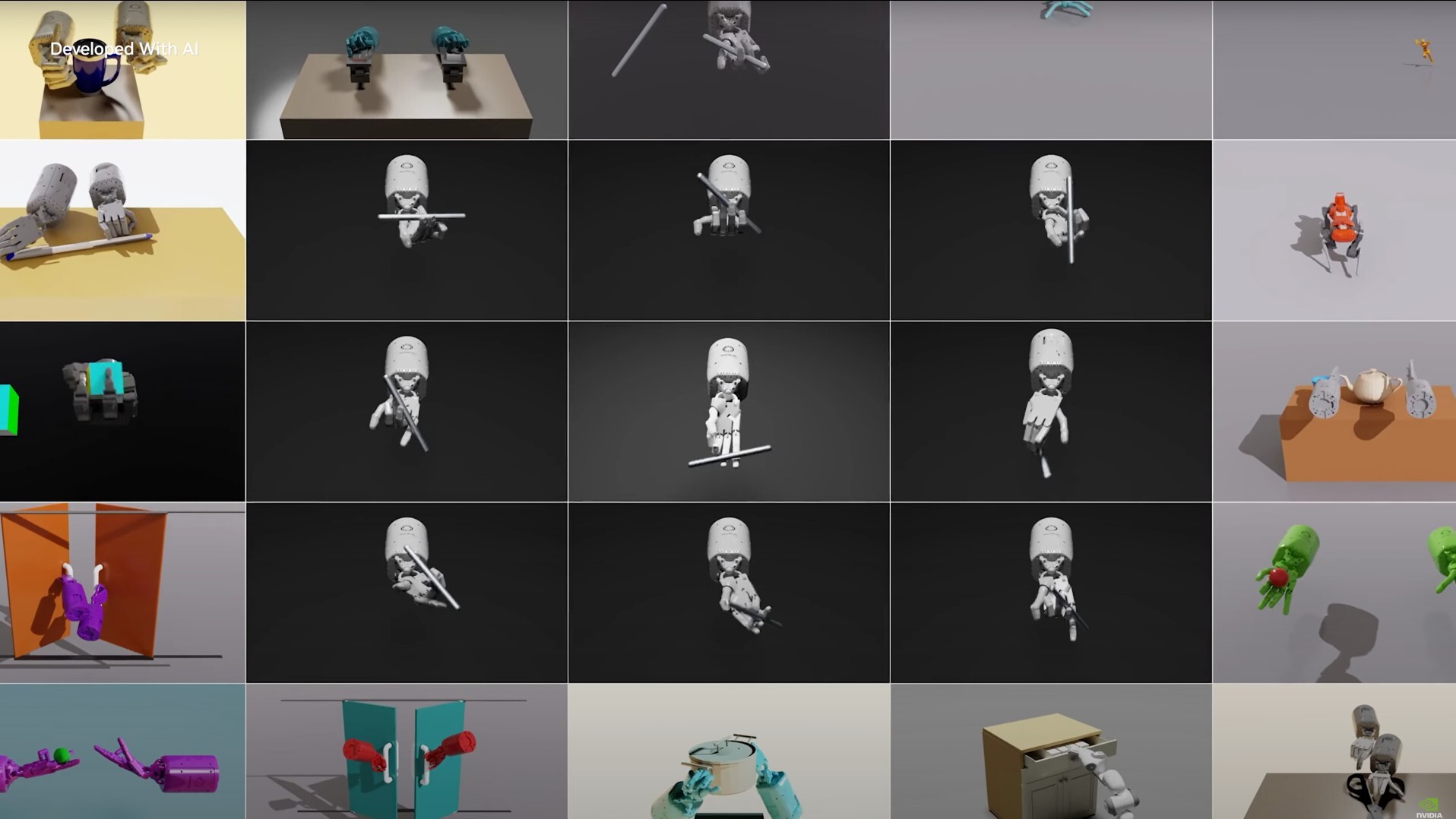
No trophy-hunting here. It’s about NVIDIA’s bottom line — and the planet’s. From chip design to humanoid robots, they’ve got squads tackling climate sims, self-driving brains, and LLMs that think faster than you blink.
But wait — collaboration’s the secret sauce. NVIDIA’s ‘one team’ mantra? It’s no fluff. Researchers huddle with product folks from day zero, testing lab fantasies against brutal reality.
Bryan Catanzaro, VP of applied deep learning research, spills:
“You have to work together as one team to achieve acceleration.”
Silos? Dead on arrival. Full-stack wizardry demands it — optimizing from silicon to software, like tuning a rocket engine where every bolt counts.
Why Does NVIDIA’s ‘One Team’ Crush Corporate Research Norms?
Most labs dream big, deliver papers, fade into obscurity. NVIDIA? They ship. Ray tracing simmered for a decade, then — boom — RTX redefined graphics, turning pixels into photoreal portals.
CUDA, launched in ‘06, unlocked GPU parallelism for everyone — scientists, gamers, AI pioneers. It’s the invisible hand accelerating your Netflix recs and protein folds.
Yet they publish too — GitHub drops, Hugging Face hugs, conference glory. But Luebke waves it off:
“We think of publishing as a really important side effect of what we do, but it’s not the point of what we do.”
Humble? Smart. Ideas flop in the wild? Pivot fast, learn humbler.
Picture the labs: humming servers in Taiwan, robot wranglers in the Bay, climate modelers in Europe. Expanding, always — because AI’s platform shift waits for no one.
Is NVIDIA Research the Key to AI’s Infinite Horizon?
Absolutely. Their work isn’t hype — it’s the forge. Without it, no generative AI boom, no smoothly data centers chatting at light speed.
My bold prediction: in five years, NVIDIA Research births the ‘CUDA 2.0’ for AGI — frameworks letting garages spin up god-like models overnight. Critics call it corporate spin? Nah. Track record screams truth: from graphics godfather to AI overlord.
And GTC? It’s their victory lap — devs swarm for the research drops that turbocharge code.
But let’s wander a sec. Remember when GPUs were just game toys? NVIDIA Research saw the matrix, bet the farm. Today, they’re eyeing robotics that walk like us, sims predicting hurricanes, cars driving themselves sans drama.
Risky? Hell yes. Rewarding? Universe-altering.
Deep dive time. Take networking — their InfiniBand webs link data centers into exascale beasts, slurping petabytes for training behemoths like GPTs. Programming systems? They’re crafting languages where humans whisper, machines manifest.
Physics sims? Forget cartoon crashes — real-world atoms dancing for drug discovery. Humanoids? Robots learning parkour via reinforcement loops that’d make Flash jealous.
Self-driving? Beyond maps — predictive souls sensing chaos.
All fueled by that deliberate dance: great research, company-relevant, world-transforming.
Skeptics yawn — ‘NVIDIA just sells chips.’ Wrong. This lab’s the R&D rocket, propelling Jensen Huang’s empire while handing devs free superpowers.
What Happens When Research Meets Reality?
Catanzaro again: labs birth gems that shatter on deployment walls. Solution? Embed researchers in product war rooms — humble pies all around.
Result? Innovations stick. RTX wasn’t luck. CUDA? Endurance.
And beyond NVIDIA? Industry ripples. Open-source floods talent pools, conferences spark alliances, papers arm the faithful.
Here’s the wonder: AI as platform shift means everyone’s a builder. NVIDIA Research democratizes godhood — your next app, powered by their risky bets.
One sentence thunder: Mind-blowing.
Now, the corporate critique I promised — subtle, but there. NVIDIA spins ‘profound impact’ smoothly, but truth? They’re privileged monopolists in silicon, hoarding expertise while rivals scramble. Still, credit where due: sharing via open platforms keeps the ecosystem alive, averting total lockdown.
GTC buzz? Expect Dally’s crew unveiling LLM optimizers slicing inference costs 10x, robot brains syncing swarms, graphics rays bending physics.
Futurist glee peaks here. This isn’t incremental — it’s exponential. AI platforms shift like PCs crushed mainframes; accelerated compute crushes CPUs. NVIDIA Research? The architects.
🧬 Related Insights
- Read more: DeepSeek V3’s Latent Attention Crushes KV Cache Bloat
- Read more: Moonlake’s Game-Engine Gambit: Why Causal World Models Need Pixels, Physics, and People
Frequently Asked Questions
What is NVIDIA Research and what does it do?
NVIDIA Research is a 400-person global team tackling high-risk AI, graphics, robotics, and computing challenges — turning wild ideas into products like RTX and CUDA.
How has NVIDIA Research impacted AI development?
They created CUDA for GPU acceleration, enabling the AI boom, and now push LLMs, sims, and robotics — all while collaborating tightly with product teams.
Will NVIDIA Research lead to AGI breakthroughs?
Likely — their risk-taking on massive models and hardware could unlock efficient paths to superintelligence, much like Bell Labs birthed modern tech.