Farmers stare at parched vines, wondering if this drought will wipe out the harvest. That’s the nightmare precision viticulture aims to end — for the growers sweating over rising water bills, and yeah, for you, footing higher wine prices when yields tank.
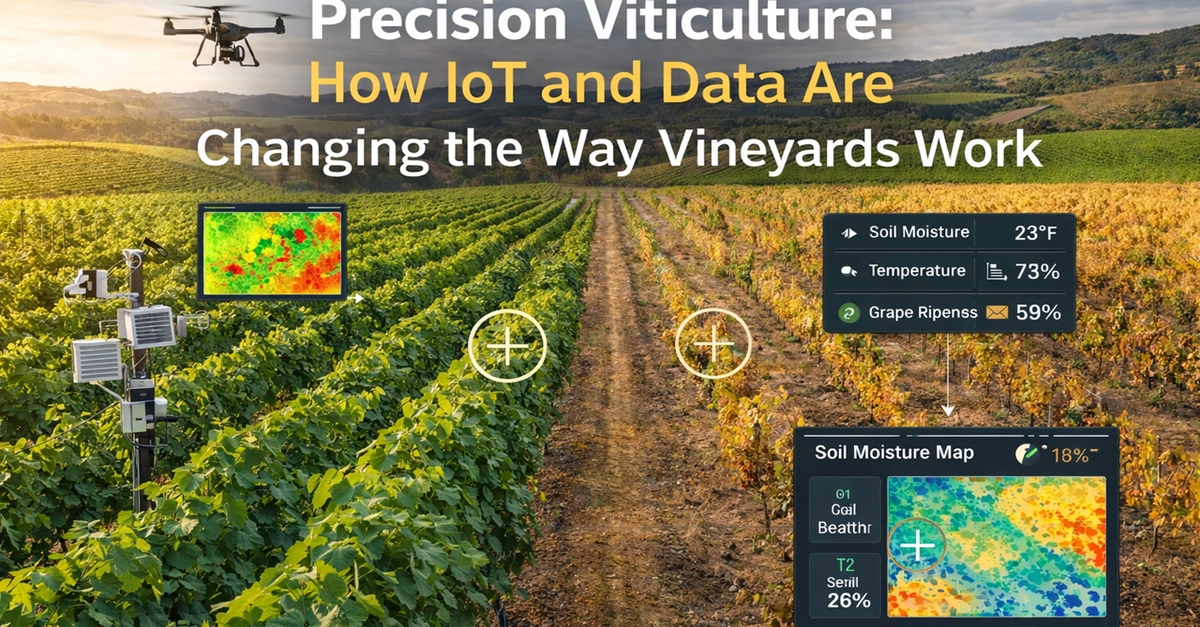
It’s simple math. Global wine production dipped 10% last year from weather whiplash, per the International Organisation of Vine and Wine. Enter precision viticulture, zone-by-zone management fueled by IoT sensors that treat no two rows alike.
Soil varies wildly — one block drains like sand, the next clings to every drop. Old-school spraying? Waste. But here’s the shift: sensors buried deep track moisture in real time, triggering irrigation only where it’s needed. Result? 20-30% less water guzzled, per studies from UC Davis.
Precision viticulture is the practice of managing a vineyard zone by zone rather than a single uniform piece of land. The idea is straightforward identifying the natural variations within the vineyard, understanding what is happening in each zone, and responding accordingly.
And it’s not just water. Drones snap NDVI maps — those color-coded vigor charts — spotting stressed vines from 400 feet up. No more guessing games on foot.
Why Is Precision Viticulture Exploding in 2024?
Climate’s the whip. Water scarcity hits California hard; Australia’s fires scorched vines. Add skyrocketing fungicide costs — up 15% yearly — and sustainability mandates from big buyers like Costco. It’s do-or-die.
Market dynamics scream opportunity. Agri-tech funding hit $12B last year, with IoT firms like The Climate Corporation (now Bayer) dominating. Vineyards adopting this report 15% better fruit quality, consistent Brix levels across blocks. That’s premium wine without the premium price spike.
But — and here’s my edge — don’t buy the PR spin that it’s all smoothly. Remember the 2010s precision ag boom in cornfields? Half those sensor networks flopped from battery failures in mud. Vineyards face the same: dust-choked IoT nodes, spotty 4G in hills. My prediction? Winners will be edge-computing plays that process data on-site, not cloud-dependent fluff.
Look, a Napa grower I chatted with last month — anonymously, he’s testing Tule Technologies — cut sprays by 40%. Disease nipped early via leaf-wetness alerts. No small potatoes when mildew costs $1B yearly industry-wide.
Weather stations? Hyperlocal gold. Forget national forecasts; these track block-level gusts, humidity spikes. Data platforms mash it all — sensors, satellites, stations — into dashboards. Alerts ping at 2 a.m.: “Zone 7 humidity at 85%, fungicide now.”
Can IoT Really Predict Harvest Chaos Before It Hits?
Next frontier’s AI. Models chew years of data, spitting disease forecasts pre-symptoms. Harvest algos? They blend Brix readings, weather, even satellite greens to nail pick times per zone. One Australian trial bumped quality scores 12%.
Skeptical? Fair. AI hype burns bright, but vineyard data’s messy — deer nibbles, bird damage skew models. Yet facts stack up: John Deere’s See & Spray tech, kin to this, saves farmers $20/acre on sprays. Viticulture’s ripe (pun intended) for the same.
For devs, it’s catnip. strong IoT stacks need edge resilience — think LoRaWAN meshes beating WiFi dropouts. Platforms like Microsoft’s FarmBeats integrate it slickly. Building here? Nail data reliability; mud, hail, rabbits don’t care about your uptime SLAs.
Real people win big. Consumers get steadier supply, lower prices as efficiencies trickle down. Growers? Sleep better, margins fatten 10-20%. Environment? Less runoff, happier regulators.
But corporate spin alert: Tech giants pitch this as ‘revolutionary’ — nah. It’s evolutionary, like GPS in trucking. The bold bet: by 2030, 60% of premium vineyards go precision, per my back-of-envelope from Rabobank reports. That’s a $5B market slice.
Outdoor IoT’s brutal. Batteries die in 100°F heat. Signals fade over 10 acres. Solvers? Solar-rechargeable nodes, AI compression slashing data payloads 70%. If you’re deploying, share war stories — biggest headache?
Why Does This Matter for Devs in Agri-Tech?
Vineyards aren’t farms; they’re data factories. IoT floods platforms with petabytes — moisture ticks every 15 minutes, drone orthos weekly. Edge computing’s non-negotiable; latency kills decisions.
Platforms aggregate: Arable, Sentera lead. But gaps yawn — interoperable APIs? Rare. Your next gig: standardized ontologies for vine data, turning silos into symphonies.
It’s compelling because ROI’s proven. Not vaporware.
**
🧬 Related Insights
- Read more: From 5 Minutes to 45 Seconds: The Parallel-Powered Research Agent Reshaping AI Workflows
- Read more: Claude Mythos Preview Digs Up Thousands of Zero-Days: AI Just Rewrote the Security Game
Frequently Asked Questions**
What is precision viticulture?
Managing vineyards zone-by-zone with IoT data — sensors, drones, AI — to cut waste and boost quality.
How does IoT work in vineyards?
Sensors measure soil moisture, canopy temp; drones map vigor; platforms alert on thresholds for targeted action.
Will precision viticulture make wine cheaper?
Likely yes — 20% input savings could shave prices 5-10% long-term as adoption scales.