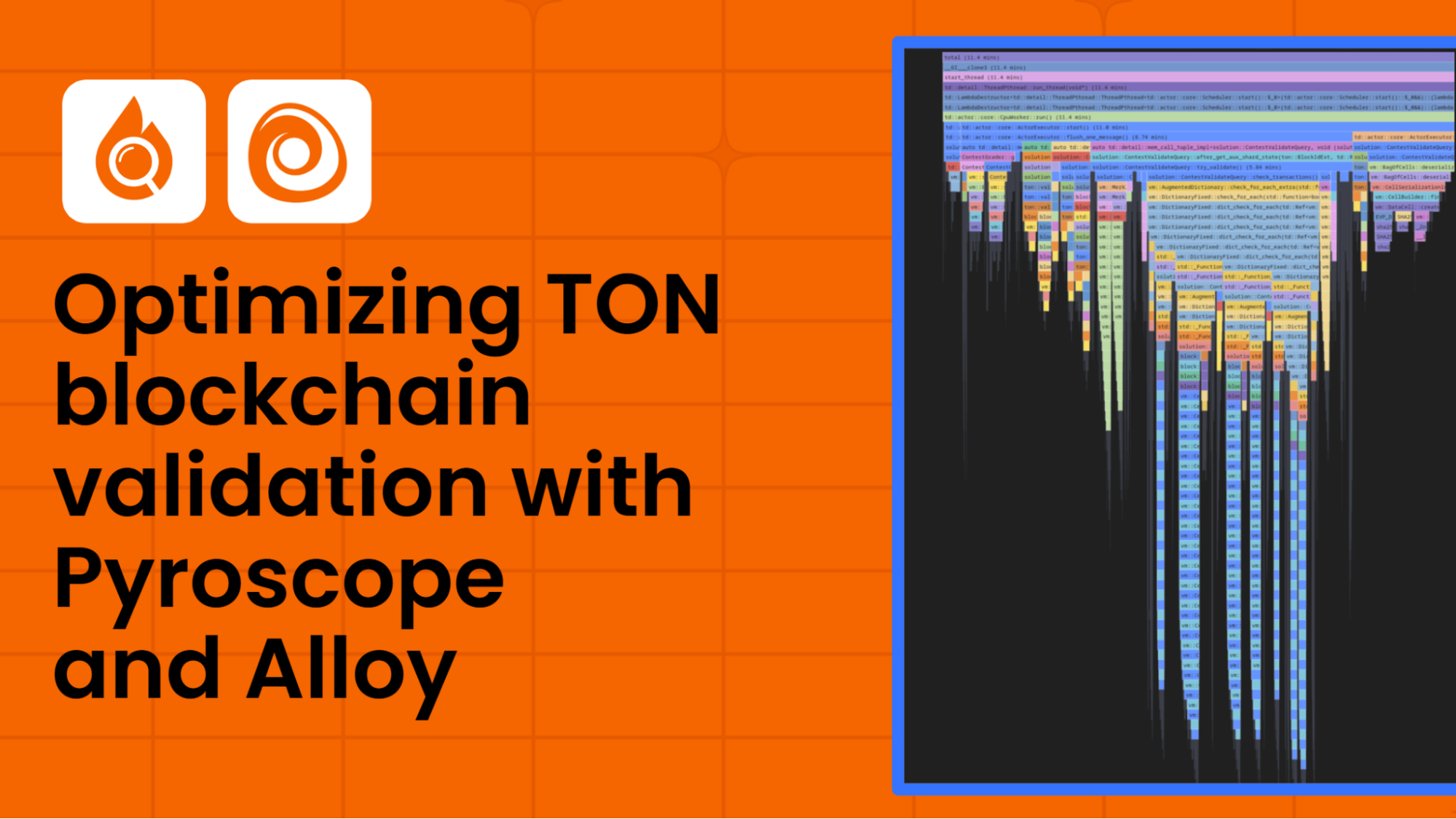
Blockchain devs everywhere — you know the drill. Your validator node’s choking on validation, transactions lag, users rage-quit. And you’re staring at flame graphs, wondering if it’s the hash or the deserialization killing you.
Finding performance bottlenecks with Pyroscope and Alloy changes that grind. No more blind stabs. These tools — eBPF magic from Alloy feeding Pyroscope — lit up last year’s TON contest like a debugger on steroids.
Look, I’ve chased perf demons since the Java HotSpot days. Back then, you’d slap on gprof, pray for symbols, and reboot. Now? Continuous profiling hits the system-wide, no code changes. But here’s my cynical take: Pyroscope’s engineers profiling contestants? Smart marketing. They’re not just helping; they’re proving their stack crushes OpenSSL defaults.
Why TON Devs Are Suddenly Obsessed with eBPF Profiling
TON’s contest was brutal. C++ warriors tweaking a block validator, squeezing microseconds from the ref impl. Scores by runtime alone. Pyroscope folks didn’t compete — they profiled entries locally. Smart.
Alloy, that OpenTelemetry collector with Prometheus guts, runs pyroscope.ebpf. Targets the whole box, not just your app. Demangles symbols fully. Pipes data to Grafana Cloud or your local Pyroscope.
Setup? Dead simple. Three lines in ebpf.alloy.txt, sudo run it. Root privileges, sure — but it grabs CPU profiles instantly.
Contest graders built with Clang’s RelWithDebInfo. Symbols intact for those gorgeous flame graphs.
The SHA256 computation happens because every cell in TON has a cryptographic hash that serves as its unique identifier. During deserialization, the system must compute SHA256 hashes to verify data integrity, prevent circular references, and enable efficient deduplication.
That’s from the original post. Spot on. vm::DataCell::create ate 14% of cycles. Cells — TON’s bit-packed DAG beasts — need hashing for everything. Serialize, hash, repeat. Brutal on CPU.
Then vm::exec_ed25519_check_signature. Ed25519 sig checks in TVM bytecode. Transaction validation’s crypto tax.
Contestants pounced. One swapped OpenSSL SHA256 for SerenityOS’s version. Entry6294. Flame diff? ~2% speedup. Modest? In contest land, that’s gold. Why faster? Who knows — maybe tighter loops, less bloat. Data doesn’t lie.
Smarter still: consolidate SHA256 feeds in CellChecker::compute_hash. One big call, not piecemeal. Algorithmic win.
Can Pyroscope and Alloy Fix Your Blockchain Nightmares?
Here’s the thing — this isn’t TON-only. Any C++ heavy-lifter with crypto hotspots. Solana? Ethereum nodes? Same pains.
eBPF’s the hero. Kernel-level sampling, low overhead. Alloy wraps it neatly, forwards to Pyroscope for diffs, comparisons. Track opt progress visually.
But — em-dash time — don’t drink the cloud Kool-Aid fully. Grafana Cloud creds? Fine for bursts. Self-host Pyroscope if you’re paranoid (or cheap). Open source core, remember?
My unique angle: This echoes the Valgrind era. Back in ‘05, we’d valgrind everything for leaks and perf. Clunky, user-space. Pyroscope/Alloy? Kernel-native, always-on. Prediction: In two years, every blockchain project’s CI will bake this in. No more “it works on my machine” excuses.
Who profits? Grafana Labs on cloud ingest. Pyroscope open, but upstream data flows their way. Contest profiling? Free ad for Alloy’s eBPF component. Skeptical vet says: Test it yourself before subscribing.
Flame graphs told tales. Ref impl: deserial heavy. Opts shifted weight — less crypto churn, more elsewhere. Track diffs week-over-week. That’s the continuous part. Not a one-shot snapshot.
Real people win: That indie TON validator maintainer? Cuts latency 5-10%. Users stick. No more “network’s slow” gripes.
The Low-Hanging Fruit Nobody Talks About
Simplest hacks ruled. Library swaps. Call coalescing.
SerenityOS SHA256 — hobby OS crypto, faster than OpenSSL? Wild. OpenSSL’s battle-tested, but bloated for niches. Contest proved it.
Devs, try this tomorrow. Grab Alloy binary. Tweak your grader or node. Profile. Diff.
TON cells? Genius data struct — 1023 bits, refs form DAGs. But hashing every deserialize? Murder. Opts unrolled loops, batched.
Crypto’s eternal tax. Ed25519 fast-ish, but frequent. Accelerate with assembly? Contest didn’t go there — time limits.
Who’s Cashing In on Your CPU Cycles?
Pyroscope: Grafana Labs spawn. Alloy: Their OTEL distro. TON contest? Perfect case study. No direct entry, but profiling winners shows muscle.
Cynic alert: Every tool pitches with benchmarks. Theirs? Real contestant code. Credible. Still, run your own.
Historical parallel: Like Cachegrind profiling in the ’00s. Simulated cache misses. Pyroscope? Real hardware traces.
Bold call: Blockchain perf wars heat up. L1s fighting TPS. Tools like this decide survivors.
🧬 Related Insights
- Read more: Stop Manually Writing Alt Text: This API Handles WCAG Compliance in One Call
- Read more: Three Friends Built and Published a Party Game in One Year—Without Writing a Line of Code
Frequently Asked Questions
What does Pyroscope do for TON blockchain optimization?
Pyroscope captures continuous CPU profiles via Alloy’s eBPF, builds flame graphs to spot hotspots like SHA256 in cell deserialization — no code changes needed.
How to set up Alloy eBPF profiling for C++ apps?
Config pyroscope.ebpf in Alloy, point to your Pyroscope endpoint, run with sudo. Profiles system-wide instantly.
Did Pyroscope beat OpenSSL in TON contest?
Not directly — contestants swapped to SerenityOS SHA256 via profiling insights, netting 2% gains confirmed by flame diffs.
