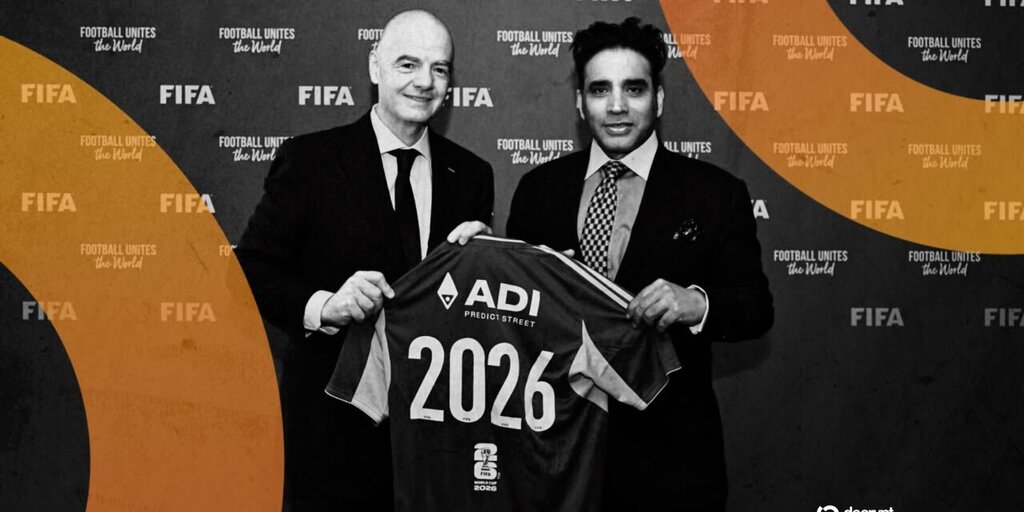
Bet on the World Cup now, apparently. FIFA’s new partnership with ADI Predictstreet, announced as the “official prediction market partner” for the 2026 World Cup, is being pitched as a watershed moment for blockchain gambling. The math sounds seductive: 5 billion viewers, a consumer-facing ecosystem, mainstream sports legitimacy. But the numbers tell a different story.
Let’s start with what’s actually happening here. ADI Predictstreet, billed as the “first consumer-facing ecosystem project on ADI Chain,” is a prediction market platform built on a Layer 1 blockchain called ADI Chain. FIFA is letting them slap “official” onto their branding and presumably integrate into the World Cup’s digital touchpoints. In return, ADI gets celebrity and reach. FIFA gets… what, exactly? A cut of transaction fees? A licensing deal? The announcement conveniently doesn’t say.
The 5 Billion Fan Fantasy
Here’s where the marketing machine hits hard. ADI’s tweet crows about reaching “every single one” of 5 billion World Cup viewers. That’s not how prediction markets work. It’s not how user acquisition works. It’s not how anything works.
The Premier League had roughly 1.6 billion viewers across all of 2023-24. The Champions League pulls in about 400 million per match. We’re supposed to believe a blockchain betting app, launching via FIFA integration, will convert even 1% of theoretical World Cup audiences into active users? The conversion math doesn’t exist. Not yet, anyway.
What ADI is actually banking on is something simpler: association. Slap FIFA’s name on it, hope mainstream crypto skeptics feel a little safer, and maybe—just maybe—you move the needle on adoption for a technology category that’s been bleeding user trust since the FTX collapse.
Why FIFA Needs This (And Why That’s the Problem)
“ADI Predictstreet was built to reach every single one of them.”
FIFA’s traditional revenue streams are doing fine. Sponsorships, media rights, merchandise—the World Cup is a cash factory without crypto. So why partner with a blockchain outfit at all?
Two reasons, and neither is noble. First, diversification. If decentralized prediction markets blow up into a $10+ billion vertical (and some analysts think they could), FIFA wants a slice and the PR win of being “forward-thinking.” Second—and more telling—blockchain companies are throwing money at sports partnerships. They’re desperate for mainstream credibility. FIFA gets paid (or equity) to lend legitimacy. It’s transactional, not transformational.
The real tell? This isn’t a FIFA initiative. This is ADI’s initiative wearing FIFA’s jersey.
The Regulatory Elephant in the Room
Prediction markets operate in a gray zone across most jurisdictions. In the U.S., they face potential SEC and CFTC scrutiny. The EU’s Markets in Crypto Regulation (MiCA) has strict requirements. The UK’s FCA doesn’t recognize most decentralized prediction platforms as regulated entities. And yet here’s FIFA, handing a platform that may or may not be compliant in most of the world’s largest markets the “official” label.
If ADI Predictstreet gets hit with regulatory action in the next 18 months—which isn’t unlikely—FIFA’s association becomes a liability, not an asset. The partnership agreement almost certainly has an exit clause, but the reputational damage won’t evaporate with legal paperwork.
What Actually Matters (Hint: It’s Not the 5 Billion)
Focus on unit economics. How much does ADI need to spend in user acquisition to land a customer? What’s the lifetime value of a World Cup bettor? Do they stick around for cricket, esports, or do they vanish when the tournament ends?
Those aren’t numbers in the press release, which is instructive. When a company is genuinely excited about fundamentals, they lead with them. When they lead with reach and association, they’re hoping you don’t ask hard questions.
The second thing to watch: regulatory status. Is ADI Predictstreet registered with relevant authorities in key markets (US, UK, EU)? If FIFA’s communications avoid this detail, treat it as a red flag masquerading as a feature.
The Broader Play (And Why Crypto Keeps Losing)
This deal is emblematic of why blockchain struggles for mainstream adoption. Rather than building genuinely superior products that people want to use, crypto companies buy credibility through partnership deals. They spray sponsorship dollars at sports teams, celebrities, and institutions, hoping association rubs off.
Sometimes it works (FTX’s arena naming deal was effective, right up until it wasn’t). Usually, it wastes money and creates baggage. A year from now, either ADI will have figured out how to convert World Cup hype into sustainable users, or FIFA will quietly distance itself from the partnership. My money’s on the latter.
The World Cup happens once every four years. Prediction markets need to work between tournaments, when attention is fractional and competition is fierce. ADI’s success won’t be measured by June 2026 partnerships—it’ll be measured by who’s still using the platform in February 2027. That’s the part nobody’s talking about.
🧬 Related Insights
- Read more: SoFi’s Big Business Banking Bet: Can One Platform Really Handle Fiat and Crypto?
- Read more: Quantum Computers Are Coming for Your Bitcoin. Here’s Who’s Actually Ready.
Frequently Asked Questions
Can I bet on the World Cup with ADI Predictstreet from the US?
Technically, maybe—but it depends on your state and whether ADI has obtained proper licensing. Decentralized prediction markets often allow US users despite operating in regulatory gray zones. That convenience comes with legal risk you should understand before depositing money.
Is this the same as betting with DraftKings or FanDuel?
No. Traditional sportsbooks are regulated, licensed, and have consumer protections. Blockchain prediction markets are decentralized and often lack those safeguards. The odds may also be set by algorithms rather than professional oddsmakers, which can affect accuracy and fairness.
Will this actually boost FIFA’s revenue significantly?
Unlikely. This looks like a modest licensing deal where FIFA gets paid for branding, not a revenue-sharing arrangement tied to platform growth. The real money for FIFA remains sponsorships and media rights—the old-school stuff.