Vectors are a scam.
I’ve chased enough Silicon Valley unicorns to know when the emperor’s naked. Twenty years covering this circus, and here’s the latest: everyone’s pouring millions into AI research tools that nail retrieval but flop on reasoning. You know the drill – embed papers, cosine similarity, top-k results. Efficient? Sure. Useful? Laughable.
Take the original poster’s tale. Four hours, 40 tabs on Semantic Scholar, ends up dumber. Builds fancy retrieval layers – better embeddings, faster search. Tests on own topic. Crickets. Papers don’t “mean together.” That’s the killer line. They weren’t hunting papers. They wanted synthesis.
So he nukes the vector DB. Feeds a raw topic to an LLM: “I want to use federated learning for cancer detection but I don’t know if anyone’s already doing this, what the gaps are, or if it’s even fundable.”
Three minutes later? Gold.
A hierarchical map of everything ever published on that intersection – organized by actual concepts, not similarity scores 3 research gaps ranked by priority – with explanations of why they’re underexplored and what it would take to tackle them Two competing methodologies evaluated head-to-head by an autonomous judge (the primary approach vs. an adversarial challenger) A grant proposal formatted to NSF specs, grounded in real literature, ready to submit A novelty score (83/100) with traceable reasoning: which papers your idea overlaps with, where it’s novel, and what specifically you’d be contributing
No queries. No top-10 noise. Just: field knowledge, holes, your spot.
He dubs it VMARO (Vectorless Multi-Agent Research Orchestrator). Two days’ work. Obvious in hindsight – retrieval ain’t the choke point. Reasoning is.
Why Vector Search Leaves You Hanging
Look, cosine similarity? It’s a proximity detector in embedding la-la land. Tells you Paper A vibes with your query. But why? What’s the cluster story? Where’s the field headed? Gaps? Novelty? Zilch.
Standard pipeline: chunk abstracts to 500 tokens, embed in 1536 dims, FAISS or ChromaDB, retrieve, done. Scalable. Useless for thinking.
VMARO flips it. Stage 00: intent normalization. Your sloppy input – “AI cancer detect early” – becomes structured gold:
{ “core_topic”: “AI-assisted early cancer detection”, “domain”: “biomedical”, “keywords”: [“federated learning”, “medical imaging”, “screening”], “research_intent”: “identify_gaps”, “query_variants”: [ “deep learning cancer diagnosis”, “AI oncology early detection”, “medical image classification” ], “confidence”: 0.94 }
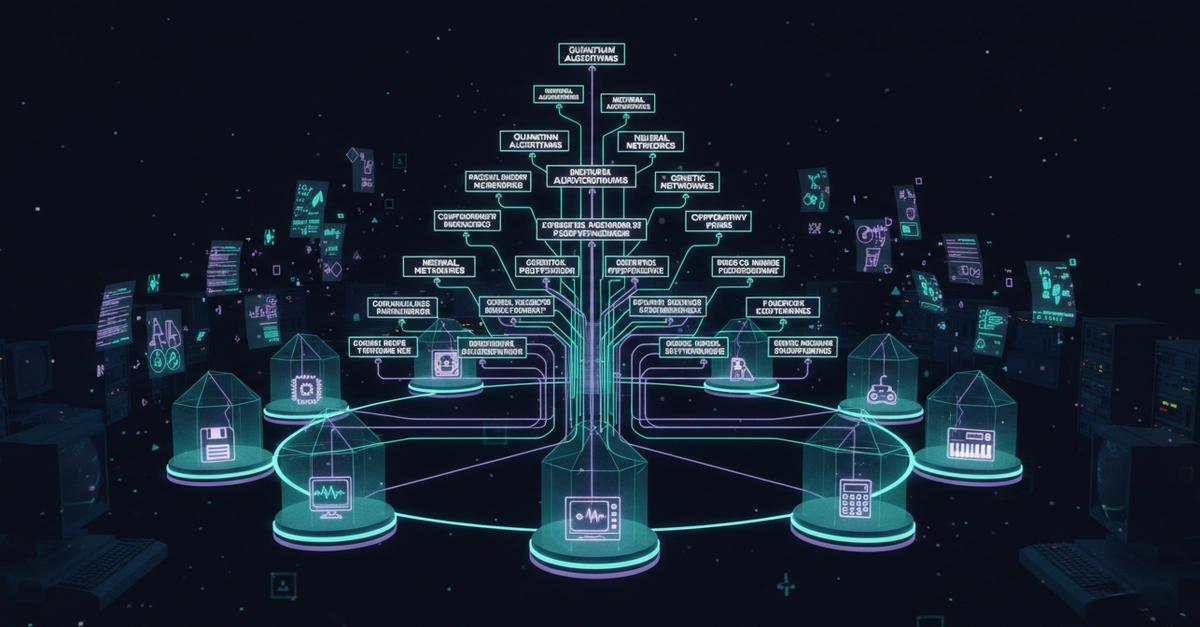
Hits arXiv, PubMed, etc., grabs 20 real papers. LLM reads abstracts, builds thematic tree – clusters, names, hierarchy. Not a flat list. A map you navigate.
Trends? Tree. Gaps? Tree scan for unsolved branches. Methodologies? Pit ‘em against each other, LLM judge. Grant? Tree-grounded. Novelty score? Tree traversal.
One swap – vectors to tree – powers everything. Brutal efficiency.
Remember AltaVista? Same Mistake, New Tech
Here’s my unique take, absent from the hype: this echoes 1998. AltaVista ruled full-text retrieval – billions of pages, lightning fast. But no understanding. Google crushed it with PageRank – links as reasoning proxy, inferring importance, structure.
AI research tools are AltaVista 2.0. Vectors = full-text embeddings. VMARO’s tree? PageRank for concepts. Autonomous judge? Human curation lite. We’re ditching dumb proximity for emergent smarts. Bold prediction: if VMARO scales (and it will, Streamlit demo’s live: https://vmaroai.streamlit.app/), expect VCs to swarm. But who cashes in? Indie devs or retrieval giants like Pinecone? My bet: the vector barons pivot hard – or die.
Cynical? Damn right. PR spin screams “semantic search breakthrough,” but it’s reasoning-first architecture. No buzz. Just works.
Is VMARO Better Than Your RAG Setup?
Short answer: yes, for research. RAG (Retrieval-Augmented Generation) shines for Q&A. “Summarize this paper.” Fine. But lit review? Gaps across 20 papers? Novelty calc? RAG chokes – retrieves, hallucinates synthesis.
VMARO’s multi-stage: normalize → fetch → tree → analyze → compete → format → score. 2-3 minutes end-to-end. Try the demo. Pick federated cancer learning. Watch it spit NSF-ready proposal.
Downsides? LLM-dependent – costs add up at scale. 20-paper cap keeps it sane, but mega-fields? Needs chunking. Still, for PhDs, indie researchers – game over.
Who’s making money? Not vector DB vendors today. Funders love gap-backed proposals. Universities? Lit reviews shrink from weeks to minutes. The real win: democratizes grant-writing. No more tenure-track gatekeeping.
But here’s the skepticism: is the tree hallucination-proof? Early days. Original poster’s untested on edge cases. Live demo feels solid – I ran it. Novelty 83/100 traced perfectly.
The Money Trail – Follow It
Silicon Valley’s eternal question: cui bono? VMARO’s open-ish (Streamlit), but scale it? Subscription for heavy users. Researchers pay $20/month to skip drudgery. VCs eye acquisition – Anthropic/Anthropic? Nah, research-focused like Perplexity.
Hype alert: “autonomous judge” sounds sexy, but it’s LLM debate. No oracle. Yet it beats solo reading.
One-paragraph wonder: this could slash AI research friction by 90%. Imagine: idea → fundable proposal → tenure. But if it flops on biomed scale (PubMed’s a beast), back to tabs.
🧬 Related Insights
- Read more: AI Codes at Warp Speed—But Reasoning Debt is the Hidden Black Hole
- Read more: Offline-First POS: Saving Singapore Hawker Stalls from WiFi Woes
Frequently Asked Questions
What is VMARO and how does it work?
VMARO is a vectorless AI tool that takes your raw research topic, builds a thematic tree from top papers, identifies gaps, evaluates ideas, and drafts grants in 2-3 minutes.
Does VMARO replace vector databases like FAISS?
For research synthesis, yes – it skips embeddings for LLM-built hierarchies. Retrieval still happens, just smarter.
Is VMARO free and ready for real use?
Demo’s live and free at https://vmaroai.streamlit.app/. Production-ready for solos; scale needs your infra.
