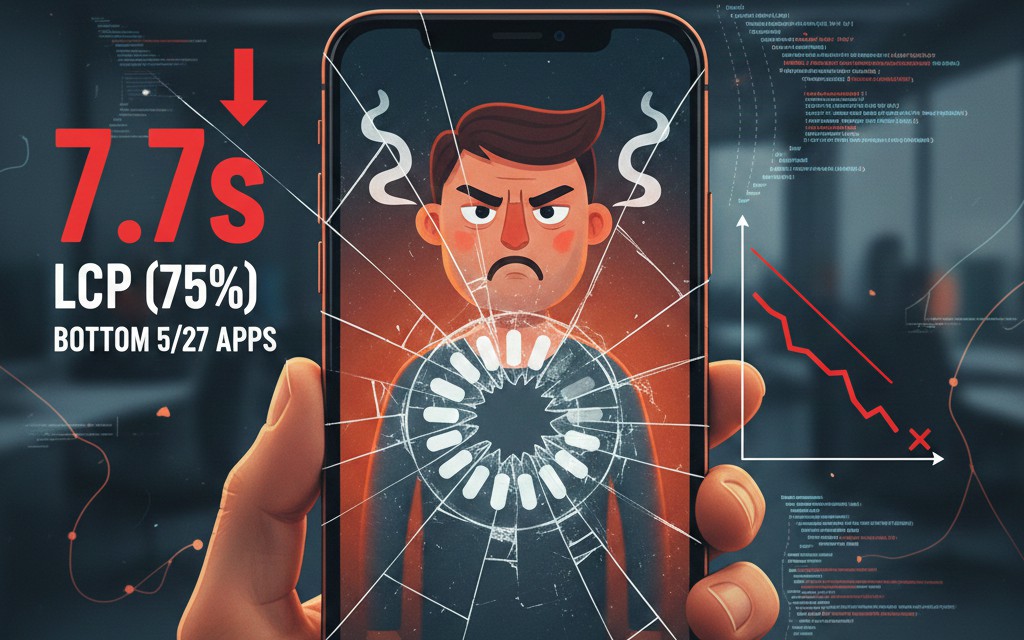
Rain hammers the office window in San Francisco as a lead frontend engineer watches Slack explode — 47 unread messages about a ‘broken checkout flow’ just 20 minutes post-deploy.
That’s the scene too many dev teams know all too well. Digital Experience Monitoring — or DEM — isn’t some shiny add-on; it’s the data-driven fix for a workflow where frontend logic dominates, state sprawls client-side, and production quirks laugh at your local Chrome tab. Market data backs this: Gartner pegs frontend performance issues as culprits in 70% of web abandons, while release cadences have shrunk to daily deploys for 62% of orgs per the 2023 State of DevOps report. Developers own outcomes they can’t see? That’s a recipe for chaos — unless DEM steps in.
What Exactly is Digital Experience Monitoring?
Short answer: it’s real-user signals fused with synthetics, frontend errors, Core Web Vitals, mobile crashes — all capturing what browsers, networks, and devices actually dish out.
Look, backend logs miss half the story. A slow API call? Sure, it’s there. But layout shifts killing interactivity on iOS Safari over flaky 4G? Vanished. DEM grabs that across real devices, regions, cohorts — variable everything. Correlate it with traces, and debugging drops from guesswork to ‘aha, line 247 in the hydration hook.’
Here’s a gem from the experts:
“Observability is evolving from describing how systems behave to revealing how that behavior feels to real users.”
That shift? Pure market logic. Frontend’s 80% of logic now (per Stack Overflow’s 2023 survey); ignore user feel at your peril.
Why Does Digital Experience Monitoring Belong in Every Dev Workflow?
Teams ship continuously — fine. But accountability’s spiked: devs answer for LCP jumps, not just green CI.
Functionality tests? Table stakes. Experience validation? The gap. Does that React refactor tank FID under load? DEM’s synthetics baseline it pre-release, spotting regressions unit tests ignore. Result: debugging cycles halve, per New Relic’s own benchmarks on adopters.
And the data doesn’t lie. CircleCI reports 40% fewer post-deploy incidents for teams blending observability into CI/CD. It’s not hype; it’s survival as cycles compress.
My take — sharp one: without DEM, you’re flying blind in a frontend world where local == fantasy. Bold prediction? By 2026, DEM-integrated workflows cut MTTR by 50%, mirroring backend APM’s impact in the 2010s (remember New Relic flipping dev ops?). Laggards? They’ll bleed talent to rivals shipping reliably.
Is DEM Worth It During Rollouts?
Releases aren’t big bangs anymore. Canary waves, blue/greens, feature flags — all demand live validation.
DEM shines here: track if v2.1 hits perf SLAs, flags regressions by region (hello, EU latency spikes), green-lights or pauses deploys. Flags let you A/B user impact sans redeploy — disable a dog of a feature in seconds.
Teams decoupling deploy from release? DEM’s their oracle. No more ‘it worked in staging’ excuses when users on ancient Androids bail.
Production Truths Staging Can’t Touch
Edge cases rule production. Old phones. Shitty WiFi. Regional CDN hiccups.
“Production environments expose edge cases that no test setup can fully replicate.”
JS bundle bloat causing ANRs? Layout shifts mid-scroll? DEM surfaces it with session context — which flows drop off, correlated to abandons. Prioritize by impact, not hunches.
Full context seals it: slow page from frontend hydration jamming backend? Traces link ‘em. Intuition’s out; data rules.
But here’s the critique — companies peddle DEM as ‘yet another dashboard.’ Wrong. It’s a feedback loop, woven into IDEs, Slack, PagerDuty. Skip it, and you’re the team firefighting weekends while competitors baseline-and-ship.
Unique insight: this echoes APM’s backend revolution, but frontend’s messier — client diversity dwarfs server homogeneity. Early adopters like Shopify shaved 25% off user complaints; expect Wall Street to mandate it for public SaaS metrics soon.
Teams ignoring DEM? They’re betting against data. Don’t.
🧬 Related Insights
- Read more: Homelab Owner Commits Entire 2FA Database to Git: Days Since Leak, Zero
- Read more: Python, JS, or Go in 2026? The Harsh Reality Check for Wannabe Coders
Frequently Asked Questions
What is Digital Experience Monitoring?
Real-user and synthetic data on frontend perf, errors, vitals — across devices, networks, regions. Bridges local dev to production reality.
Does Digital Experience Monitoring replace backend observability?
No — it correlates with it. Frontend blind spots like JS errors don’t hit logs; DEM fills the gap for full-stack debugging.
How does DEM speed up dev workflows?
Baselines experience pre-release, validates rollouts live, prioritizes prod fixes by user impact — cuts guesswork, halves MTTR.