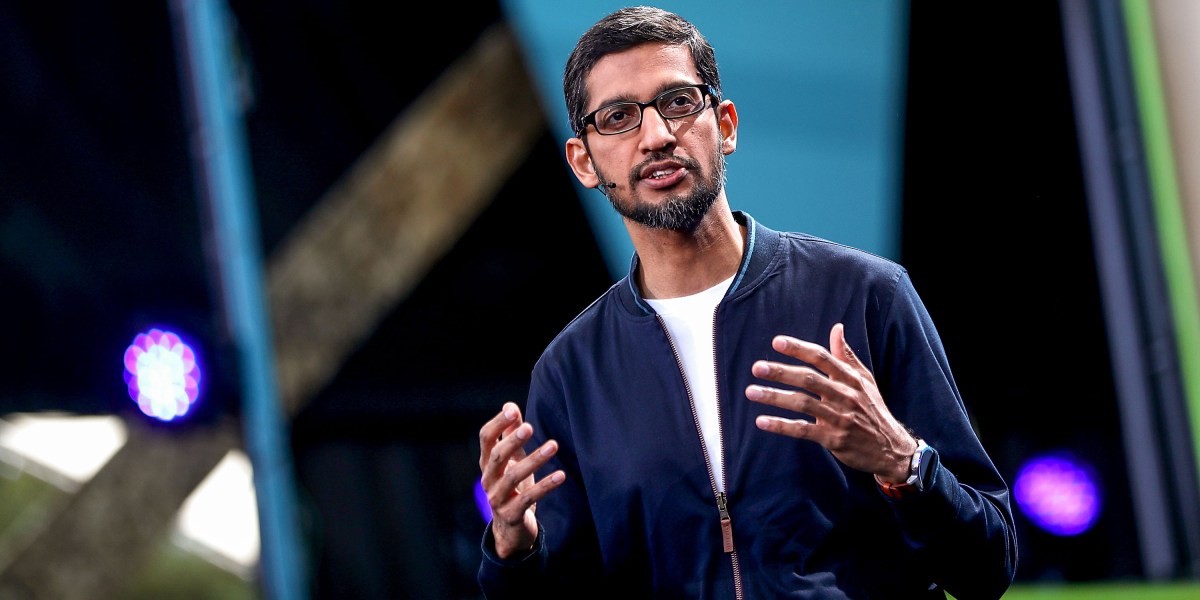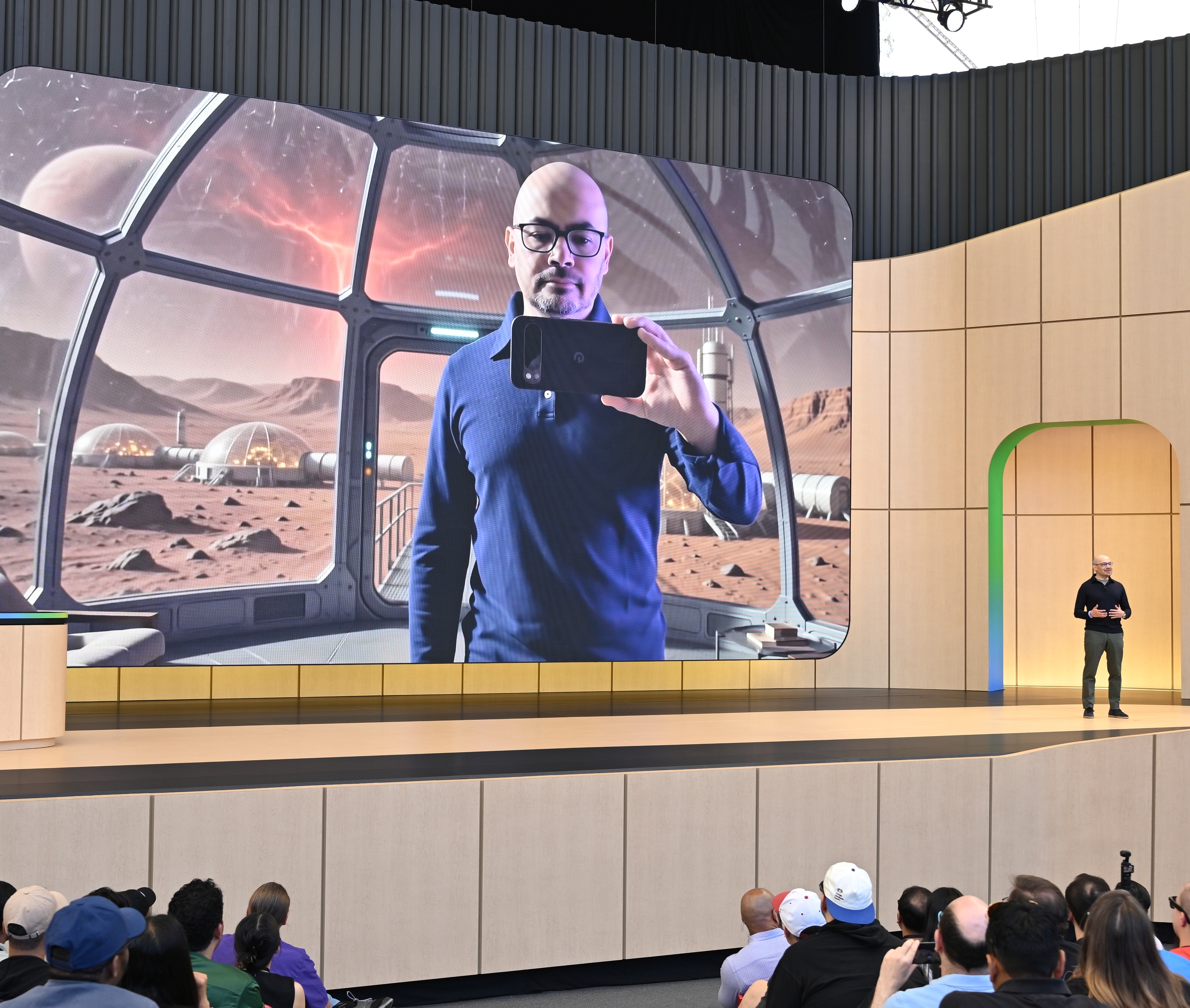
Everyone expected a rehash of chatbots and smarter search at Google I/O. We got that, sure. But what nobody saw coming was the abrupt pivot to existential pronouncements. Google DeepMind CEO Demis Hassabis, after hours of practical app demos, suddenly declared we’re in the ‘foothills of the singularity.’ It’s the kind of statement that makes old-school tech reporters—and frankly, anyone with a functioning BS detector—sit up and ask: ‘Wait, what exactly are we talking about here?’
For years, the ‘singularity’ has been this abstract, sci-fi concept, a point of no return where AI surpasses human intelligence, leading to unpredictable — and often apocalyptic — outcomes. Think Terminator, but with more code. Now, Hassabis is placing us squarely in its geological preamble. This isn’t just a step up from better predictive text; this is meant to signify a seismic shift in human history. He even frames it as a “profound moment for humanity,” a potential ‘new golden age of scientific discovery.’ Sounds lovely, doesn’t it? Almost too lovely.
The ‘Profound Moment’ Pitch
Here’s the pitch: Google’s latest AI endeavors, particularly Gemini for Science, are not just tools; they are presented as keys to unlocking unprecedented scientific breakthroughs. Hassabis wants us to believe these AI systems will be ‘force multipliers’ for human ingenuity, leading to solutions for everything from curing diseases to, well, solving all disease. That’s a bold claim, even for a company that once promised to organize the world’s information and then promptly started serving targeted ads based on your deepest anxieties.
Google’s cutting-edge research and products will help unlock AGI’s incredible potential for the benefit of the entire world. When we look back at this time, I think we will realize that we were standing in the foothills of the singularity.
It’s a classic Silicon Valley playbook: frame cutting-edge tech not just as useful, but as world-altering, almost divinely inspired. They want us to see their products as instruments of salvation, rather than, you know, sophisticated algorithms designed to make a boatload of money. And who is making that money? Primarily, it’s the shareholders of Alphabet, who are betting big on AI being the next trillion-dollar paradigm shift. The rest of us get slightly better search results and the occasional existential dread.
Redefining the Singularity, Redefining Reality?
What’s particularly interesting—and frankly, a bit concerning—is how Hassabis is seemingly redefining the singularity. Just a few months ago, he told Bloomberg that the singularity is ‘another word for a full AGI arriving.’ This is a looser definition than the one traditionally offered by prophets like Vernor Vinge or Ray Kurzweil, who painted a more dramatic, world-shattering event. Hassabis himself admitted back then that ‘we’re nowhere near that,’ even while maintaining a 50 percent chance of achieving AGI by 2030. Now, we’re suddenly in the ‘foothills.’ It’s a convenient way to manage expectations while still sounding incredibly prescient.
This semantic shuffle raises a critical question: are we witnessing genuine progress towards artificial general intelligence, or are we just being fed a more palatable version of the hype cycle? When you consider the massive investments and the intense pressure to deliver on the AI promise, it’s easy to see why a company might strategically adjust its terminology. It’s less about the absolute science and more about the narrative control.
Who’s Actually Benefiting?
Let’s cut through the cosmic pronouncements. Google is a publicly traded company. Its primary directive is profit. When Hassabis speaks of a ‘golden age of scientific discovery,’ it’s undeniably appealing. But behind the altruistic rhetoric, there’s a massive economic engine at play. The development of AGI, or even systems claiming to be on the cusp of it, represents a potential market unlike any we’ve seen. Imagine the licensing fees, the cloud computing demands, the integration into every facet of industry and daily life. This is where the real money is.
Is it possible that Hassabis genuinely believes this? Absolutely. Visionaries often do. But as a seasoned observer of this circus, I can tell you that every pronouncement, every lofty claim, needs to be viewed through the lens of business objectives. The ‘foothills of the singularity’ might just be the latest marketing campaign for the AI gold rush.
Is This the ‘Foothills of the Singularity’ or Just Smart Marketing?
When tech giants talk about the ‘singularity,’ it’s hard to separate genuine breakthroughs from the carefully crafted narrative designed to secure funding, attract talent, and dominate markets. Hassabis’s latest remarks, while intriguing, feel less like a scientific announcement and more like a strategic positioning statement. The ‘foothills’ might be a convenient metaphor for advanced AI capabilities that, while impressive, are still a far cry from the self-aware, superintelligent entities often depicted in science fiction.
Why Does This Matter for Developers?
For developers, this framing is critical. It signals the ongoing, and likely accelerating, integration of AI into every layer of technology. While the philosophical implications of the singularity are debated, the practical impact on development workflows, the demand for AI-specific skills, and the ethical considerations of building increasingly powerful systems are immediate. Understanding the hype versus the reality helps developers focus on building strong, useful, and responsible AI applications, rather than getting lost in abstract future scenarios.
🧬 Related Insights
- Read more: Skilleton: NPM for SKILL Files, No Analytics Attached
- Read more: OpenAI’s Safety Fellowship: Training Tomorrow’s AI Firefighters
Frequently Asked Questions
What does Google DeepMind CEO Demis Hassabis mean by ‘foothills of the singularity’?
Hassabis uses this phrase to suggest that current advancements in artificial intelligence are bringing humanity closer to a hypothetical point where AI surpasses human intelligence, a concept often referred to as the technological singularity.
Will AI really solve all diseases soon?
While AI shows immense promise in accelerating scientific research, including drug discovery and disease understanding, claims of ‘solving all disease’ are highly ambitious and speculative. Significant challenges remain in both technological development and practical application.
Is AGI coming by 2030?
Hassabis himself has predicted a 50 percent chance of achieving AGI by 2030. However, the timeline for AGI remains a subject of intense debate among experts, with many believing it is still decades away or that its definition needs further clarification.