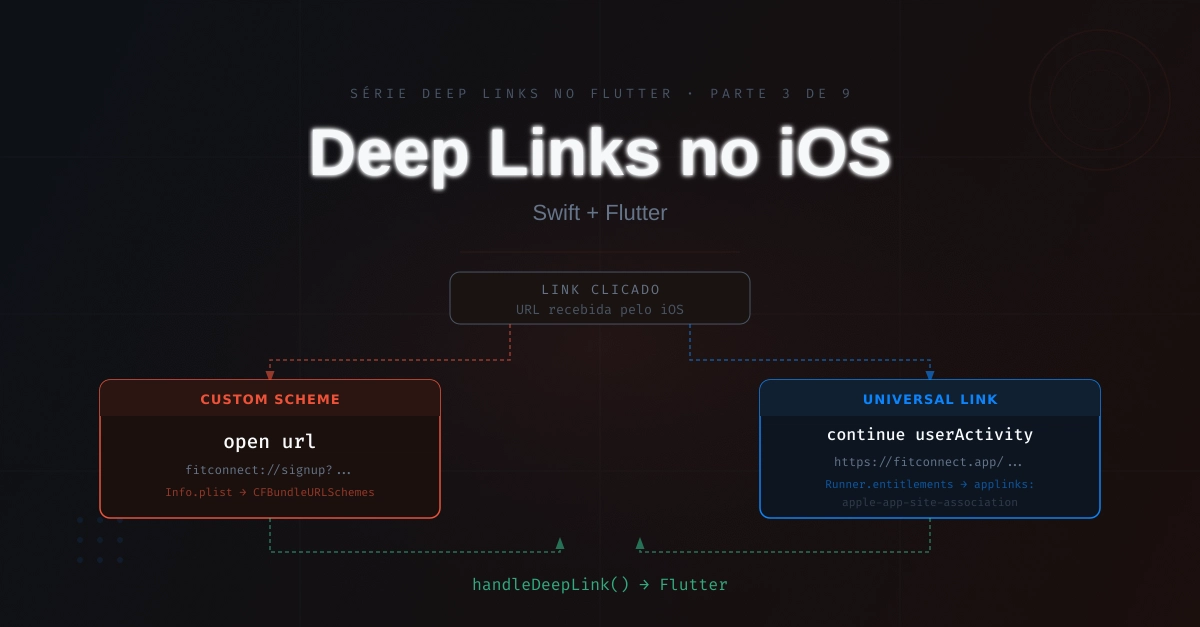
Deep links on iOS work.
And after 20 years chasing Silicon Valley’s shiny objects, that’s high praise. Custom schemes and Universal Links in a Flutter app—using pure Swift—sound like a recipe for pain. But this setup? Clean. Almost too clean. Apple’s been tweaking this since iOS 9, promising we’d ditch those ugly app store redirects. Remember 2015? Everyone hyped Universal Links as the savior. Spoiler: Server-side apple-app-site-association files still trip up 90% of devs. Yet here we are, Part 3 of a series making it plug-and-play.
Look, Flutter’s great for cross-platform dreams—write once, ship everywhere, right? Wrong. Native bridges like this are where the money’s made. Who profits? Plugin maintainers, sure. But you, the dev grinding deadlines? This saves hours. No more half-baked pub.dev packages that flake on cold starts.
Custom Schemes: Quick, Dirty, and Reliable
Custom schemes. fitconnect://whatever. Dead simple. Plop it in Info.plist, and iOS knows your app owns that namespace. No server fiddling. No entitlements drama.
Here’s the plist snippet that does it:
CFBundleURLTypes CFBundleTypeRole Editor CFBundleURLName com.fitconnect.app CFBundleURLSchemes fitconnect
Boom. CFBundleURLSchemes registers the magic word. CFBundleTypeRole as “Editor”? That’s Apple saying your app can not just open these, but spit ‘em out too. Bundle name? Reverse your ID, convention since forever. I’ve seen teams botch this—app crashes on launch. Don’t.
But schemes scream “mobile app incoming!” Users see the switcher dance. UX hit. That’s where Universal Links strut in, pretending to be web-normal.
Why Does iOS Make Deep Links So Complicated?
Universal Links. The holy grail. Click fitconnect.app/somepath, and poof—your Flutter app opens directly. No confirmation sheets. smoothly, they say.
Lie. First, entitlements file. Runner.entitlements:
com.apple.developer.associated-domains applinks:fitconnect.app
applinks: prefix mandatory. Miss it? iOS yawns. Then, server hosts apple-app-site-association JSON at /.well-known/. Bidirectional trust—app claims domain, domain claims app. Part 5 covers that server bit. Until then? Test with schemes.
Complication? Apple’s paranoid about phishing. Fair. But devs pay. Historical parallel: Facebook App Links in 2014. Same promise, same headaches. Crashed and burned because no one configured servers right. Flutter’s rise forces a rethink—hybrid apps need this yesterday.
And Flutter? MethodChannels and EventChannels bridge the gap. AppDelegate.swift becomes your traffic cop.
AppDelegate: The Unsung Hero
Cold start via launchOptions. Background tap via open url or continue userActivity. iOS fragments it—unlike Android’s tidy Intent.
Code’s elegant. Private channels: “com.fitconnect.app/deeplink” for methods, “deeplink_stream” for events. EventSink pushes live links while app runs.
@main @objc class AppDelegate: FlutterAppDelegate { private let CHANNEL = “com.fitconnect.app/deeplink” // … setup }
Handle initial link in didFinishLaunchingWithOptions. Sniff URL from launchOptions or userActivity. Weak self avoids retain cycles—pro move.
open url for schemes. continue userActivity for universals. Both funnel to handleDeepLink. Dedupe with lastProcessedLink. Smart.
Unique insight: This pattern’s straight from 2016 WWDC ashes. Apple iterated because early Universal Links ignored foreground apps. Now? Solid. Bold prediction: By iOS 19, PWAs kill native deep links unless you nail AASA files. Flutter devs, invest now—web’s eating your lunch.
Can Flutter Handle Deep Links smoothly?
Seamlessly? Ha. Channels shine: getInitialLink for Flutter side on launch. Stream for hot links. No polling nonsense.
Flutter Dart code (implied from series): Listen on stream, parse path, navigate. Say, fitconnect://profile/123 → /profile?id=123.
Cynical take: Google’s Flutter pushes “hot reload” fairy tales, but native plumbing’s where apps live or die. PR spin calls it “platform-agnostic.” Bull. You’re writing platform-specific glue. Who makes money? JetBrains on plugins, maybe. You? Ship faster.
Test it. scheme://test from Safari. Universal pending server. Cold start: Xcode launch with URL arg. Edge: Same link twice? Ignored. Genius.
Pitfalls? Info.plist typos crash builds. Entitlements need provisioning profile match. Xcode buries errors—grep logs.
Deeper: NSUserActivity.webpageURL nil? Fallback false. UserActivityTypeBrowsingWeb check—precise.
FlutterViewController cast safe? Window.rootViewController assumes default runner. Custom? Adapt.
The Money Angle: Why Care Now?
Deep links = retention gold. 30% lift in reopens, per old Branch.io stats. Apps die without ‘em. Flutter shops chasing TikTok clones? This is table stakes.
Skepticism: Universal Links flake on iCloud Private Relay. VPNs too. Custom schemes forever viable fallback.
Wrap: Part 3 nails iOS. Android symmetric from Part 2. Cross-platform deep links—viable dream.
🧬 Related Insights
- Read more: Dryft: AI Memory Evolves or Dies
- Read more: April 2026 Dev Tools Hiring: Raycast, Cursor, Zed Roles That Actually Pay Off
Frequently Asked Questions
What does deep link mean in Flutter iOS?
Deep link opens specific app screen from external URL, like fitconnect://profile/123 to user profile. Flutter uses channels to pass from native to Dart.
How to setup universal links iOS Flutter?
Add associated-domains entitlement, server AASA file, handle in AppDelegate continue userActivity. Test sans server with schemes first.
Do custom URL schemes still work iOS 17?
Yes, reliable for dev. UX prompts user, but no server needed. Use for prototypes.
