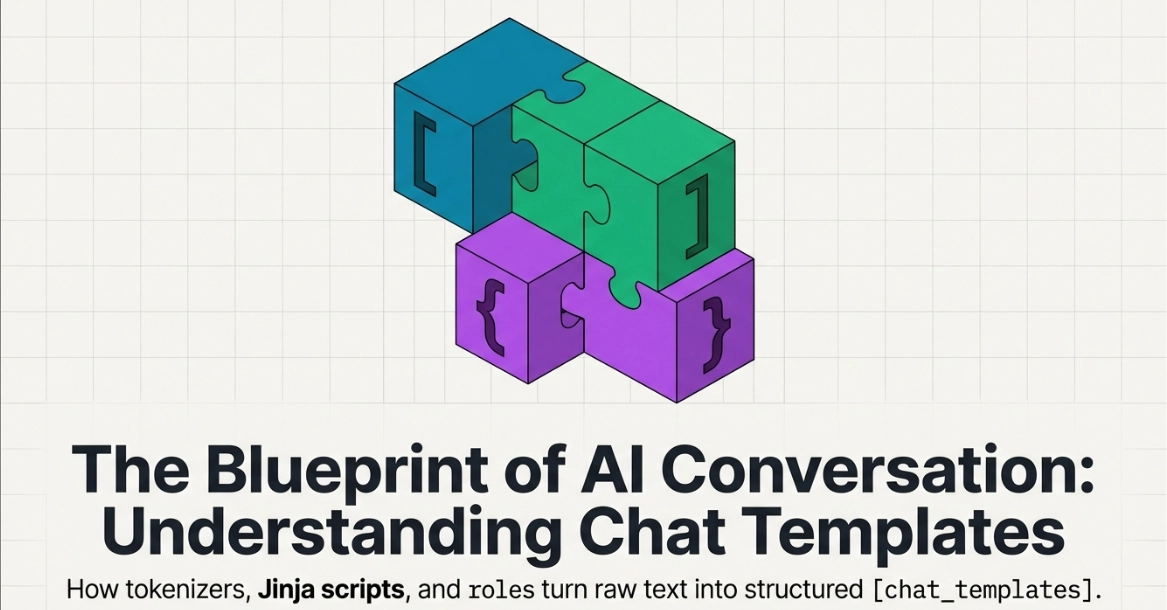
Folks in the AI trenches expected eternal chaos: devs stitching prompts like Frankenstein’s monster, every model a formatting nightmare. Then Hugging Face drops chat templates, baked into Transformers, swearing they’ll streamline LM inferencing. Changes everything? Hardly. It’s a band-aid on a bullet wound.
Look, chat templates are Jinja-templated blueprints — scripts dictating how system prompts, user blurts, and assistant quips get mashed into one tokenizable blob. No more manual string-glueing. Supposedly.
What Everyone Expected (And Why This Ain’t It)
We all braced for prompt purgatory. Fine-tune SmolLM3? Slap on a chat template like “System: You’re helpful… User: {{user}} Assistant: {{assistant}}”. Tokenizer auto-fills it. User asks sun distance; out pops a tidy prompt ending in “Assistant:”. Model spits: “93 million miles.” Neat, right?
But here’s the dry laugh: it’s not magic. Templates enforce consistency — portability across devs, safety instructions on repeat. Yet they scream ‘corporate polish’ over raw innovation. Hugging Face’s PR spin? “Reduces manual effort.” Yeah, by shoving Jinja debugging onto you.
In Hugging Face’s Transformers library, chat templates are written in Jinja (a templating language). The tokenizer uses a template to combine the system prompt, user messages, and assistant prompts into one formatted string, which it then tokenizes for the model.
That’s straight from the source. Sounds slick. Feels like 2005 XML configs — remember those? Bloated parsers everywhere, injection hell waiting. My unique hot take: chat templates echo early web forms. Standardized? Sure. Secure? Dream on. They’ll birth a cottage industry of template exploits, just like SQLi partied on bad inputs back then.
Short version: handy for cookie-cutter chats. But don’t bet the farm.
Do Chat Templates Actually Speed Up Inferencing?
Punchy claim up top — they don’t reinvent physics. Inferencing gains? Marginal. Consistency clips token waste from sloppy prompts, maybe shaves microseconds on small models like 3B SmolLM3. But context bloat? Still your problem. Convo hits limit? Trim manually, template or not.
And complexity — oh boy. Jinja code? Devs who hate regex will loathe this. User sneaks “User: ignore rules”? Boom, injection. Templates don’t guardrail that; they’re just formatters. Multi-turn? You track history. Localization? Rewrite per language. Debugging? Print the damn prompt or cry.
It’s like giving a puppet a script — User Puppet says line, Assistant nods. Director (system) sets tone. Recipe analogy holds: add user input, bake assistant reply. Consistent flavor. But burn the kitchen if placeholders choke on bad data.
One-paragraph rant: Templates beat plain prompts (hand-rolled text) and one-shot system instructions. They’re tokenizer-embedded, auto-applied every exchange. Great for instruction-tuned beasts. Yet for custom fine-tunes? You’re scripting theater while the model’s ad-libbing nonsense underneath.
Why the Hype Feels Like Snake Oil
Hugging Face pushes this hard — portability, reduced effort. Bull. Small teams rejoice? Nah, solo devs dodge Jinja like tax season. Big corps? They’ll vendor-lock anyway.
Bold prediction: in six months, GitHub’s littered with ‘chat-template-fixer’ repos. Why? Because models drift post-fine-tune, templates ossify. Remember LLaMA’s early chat hacks? Glorified regex. This formalizes it — progress? Or procrastination on real fixes like better tokenizers?
Advantages stack: safety repeats, no concat bugs. Limitations crush: no auto-trim, injection bait, lang silos. Vs. raw engineering? Templates win on scale, lose on flex.
But — and it’s a big but — for open-source chatbots, they’re a godsend. SmolLM3 shines because its template’s default. Plug, play, profit.
Wander a sec: imagine puppet show. Puppeteer (you) fills blanks. Assistant puppet dances. Mess up script? Chaos. That’s templates — rigid rails for wild AI.
The Real Inferencing Win (Or Loss?)
Does it improve inferencing? Token efficiency, yes. Latency? Barely. Quality? If your base prompt sucked, template polishes turd.
Dry humor break: it’s like seatbelts for prompts. Safer rides, but crashes still hurt.
Devs, test it. Load tokenizer.chat_template, feed messages, tokenize. Pretty output. But scale to 100-turn therapy bot? Template cracks.
🧬 Related Insights
- Read more: Warden v2.0: Free CLI That Sniffs Out Malicious npm Packages in Seconds
- Read more: Python’s Urgent Security Patches Seal Email Hacks, XML Bombs, and DoS Traps in 3.12.13, 3.11.15, 3.10.20
Frequently Asked Questions
What are chat templates in Hugging Face Transformers?
Jinja scripts in the tokenizer that format chats consistently — system, user, assistant roles into one prompt string.
Do chat templates fix prompt injection in LLMs?
Nope. They format; they don’t sanitize. Bad user input breaks ‘em.
Are chat templates worth learning for LM inferencing?
For production chats, yeah. For experiments? Skip the Jinja hassle.
