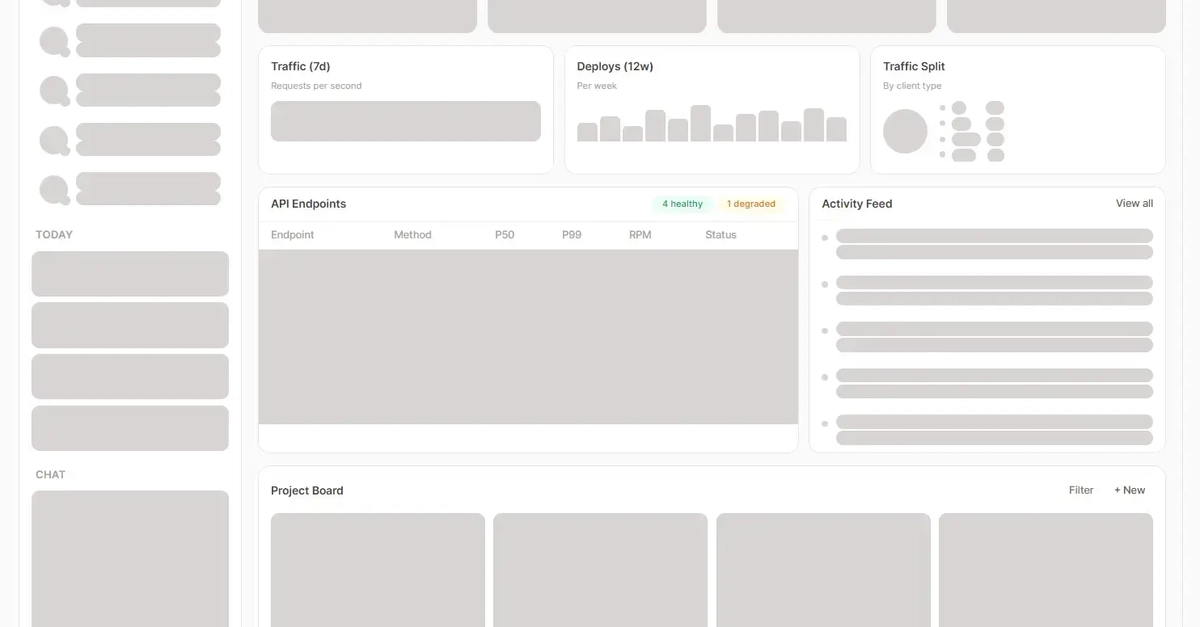
Everyone figured skeleton loaders would stay a manual drag. You know the drill: eyeball some gray bars in Figma, pray they match your dashboard on mobile, then curse when the real data loads and everything jumps.
Boneyard-js? It doesn’t care about your prayers. This CLI tool grabs your actual UI — React, Vue, Svelte, Angular, even React Native — and extracts skeleton files that mirror it perfectly. Build-time magic. Responsive bones for every viewport. No more guessing.
Layout shift matters. Google hates it. Users hate it. And devs? We’ve wasted hours faking it.
Why Boneyard-JS Feels Like Cheating
Here’s the thing. Traditional skeletons are artist’s renderings — close enough, maybe, on a good day. But auth screens? API-fed feeds? Those shift like tectonic plates.
Boneyard uses fixture-based capture. Feed it mock data, snap the layout, done. Named skeletons in a registry? Import ‘em anywhere, they resolve automatically.
boneyard is a skeleton loading framework that captures your real UI and turns it into matching placeholder screens.
That’s straight from the docs. Punchy. Honest. No fluff.
And responsive? It generates bone files for desktop, tablet, phone. One command.
But wait — is this overkill for a simple card grid? Nah. Cards, dashboards, feeds: prime targets. Anywhere layout shift bites.
Look, I’ve seen tools promise the moon before. Remember those early CSS-in-JS skeletons? Bloated. Brittle. This feels different. CLI-driven means it’s framework-agnostic at heart. Plug in, extract, ship.
Does Boneyard-JS Actually Save Time for Frontend Devs?
Short answer: yes. Long answer — sprawl with me here — imagine your team juggling React Native for the app and Svelte for the web dashboard. Separate skeleton chores? Multiply the pain by two, toss in auth flows that vary by user state, and you’ve got a recipe for inconsistent loading screens that make stakeholders twitch.
Boneyard unifies it. Extract once, reuse across. Fixture capture handles dynamic stuff — login walls, personalized feeds — without you sketching every variant.
Dry humor alert: it’s like hiring a forensic artist who doesn’t need your description because they saw the crime scene themselves.
Unique twist nobody’s saying? This echoes the Tailwind revolution (yeah, I went there). Back then, utility classes killed bespoke CSS hell. Boneyard kills bespoke skeleton hell. Prediction: in two years, every design system will have a boneyard step baked in. Or it’ll be table stakes, and laggards will look amateur.
Caveat — CLI means terminal time. If your team’s allergic to command lines (hi, no-coders), friction ahead. And React Native support? Bold, but test it hard; mobile layouts are finicky beasts.
Still, for cards and dashboards? Chef’s kiss.
Punch.
The Hype Trap: Is This Just Another Loader Gimmick?
Corporate spin screams “framework support for all!” But let’s poke it. Angular? Sure. React Native? Ambitious. What about bleeding-edge like Solid.js or Qwik? Crickets, probably.
Good fit, they say, for content feeds. True. Layout shift kills CLS scores — Core Web Vitals, anyone? Boneyard sidesteps that.
But here’s my beef: why CLI-only? No VS Code plugin yet? No Figma export? Feels half-baked for 2024.
(Aside: registries sound slick — named skeletons auto-resolve. Like npm but for bones. Cute.)
Skeptical? Me too. But it works cross-framework. That’s rare air. Manual skeletons scale poorly; this automates the tedium.
And fixture-based? Smart. Mock your API, capture the bones. No live data leaks during dev.
So, changes things? Yeah. Expect skeleton fatigue to drop. Devs get back to features, not placeholders.
What Sucks About Current Skeleton Tools?
Quick roast. shimmer-react? Pretty gradients, zero accuracy. react-loading-skeleton? One-size-fits-most, mostly misses. Framework lock-in everywhere.
Boneyard laughs. Build-time extraction from your components. Real layout. Responsive out the gate.
Dry laugh: it’s the skeleton that knows what it’s imitating.
Downsides? Learning curve for fixtures. Registry setup. But once humming? Fly.
Bold call: this nips a UX pain point that’s festered since infinite scrolls went mainstream. Historical parallel — jQuery for AJAX loading spinners. Everyone rolled their own. Messy. Boneyard standardizes skeletons like Preact did components.
🧬 Related Insights
- Read more: BYTE, Dr. Dobbs, and the Magazines That Made You Type Your Own Code
- Read more: My AI Agent Said Monday—It Was Tuesday. The Time Bomb in Every Agent
Frequently Asked Questions
What is boneyard-js?
CLI tool that scans your real UI components (React, Vue, etc.) and generates matching skeleton loaders — responsive, framework-agnostic, no manual design.
Does boneyard-js work with React Native?
Yep, full support. Extracts skeletons from mobile layouts too, handling auth and dynamic screens via fixtures.
Is boneyard-js free?
Open-source vibes from the name. Check the repo — likely MIT or similar. No paywalls mentioned.