Everyone at KubeCon + CloudNativeCon Europe 2026 figured AI agents would steal the show — flashy demos of LLMs orchestrating clusters, vendor booths dripping with genAI promises. But AWS? They dropped AWS EKS Auto Mode, a no-nonsense fix for the grunt work that’s kept platform engineers up at night: node lifecycle management.
This changes everything. Or at least, it should. Kubernetes clusters hum with power, sure, but that muscle breeds toil — patching nodes, picking instance types, ensuring security patches don’t break deploys. AWS claims Auto Mode wipes that slate clean, handing off the undifferentiated heavy lifting. Market dynamics scream opportunity: with Kubernetes powering 70% of container workloads (per CNCF surveys), any toil reducer juices adoption, especially as enterprises eye AI-scale clusters without ops Armageddon.
Look, platform teams aren’t building moats anymore. They’re firefighting.
“To be honest, most of the difficulties come from the day-to-day tasks that take platform teams’ time away from delivering true value for their business,” Kestner explains. “These are the things that impede developers when they are trying to create unique and differentiated value in applications that ship faster and serve users better.”
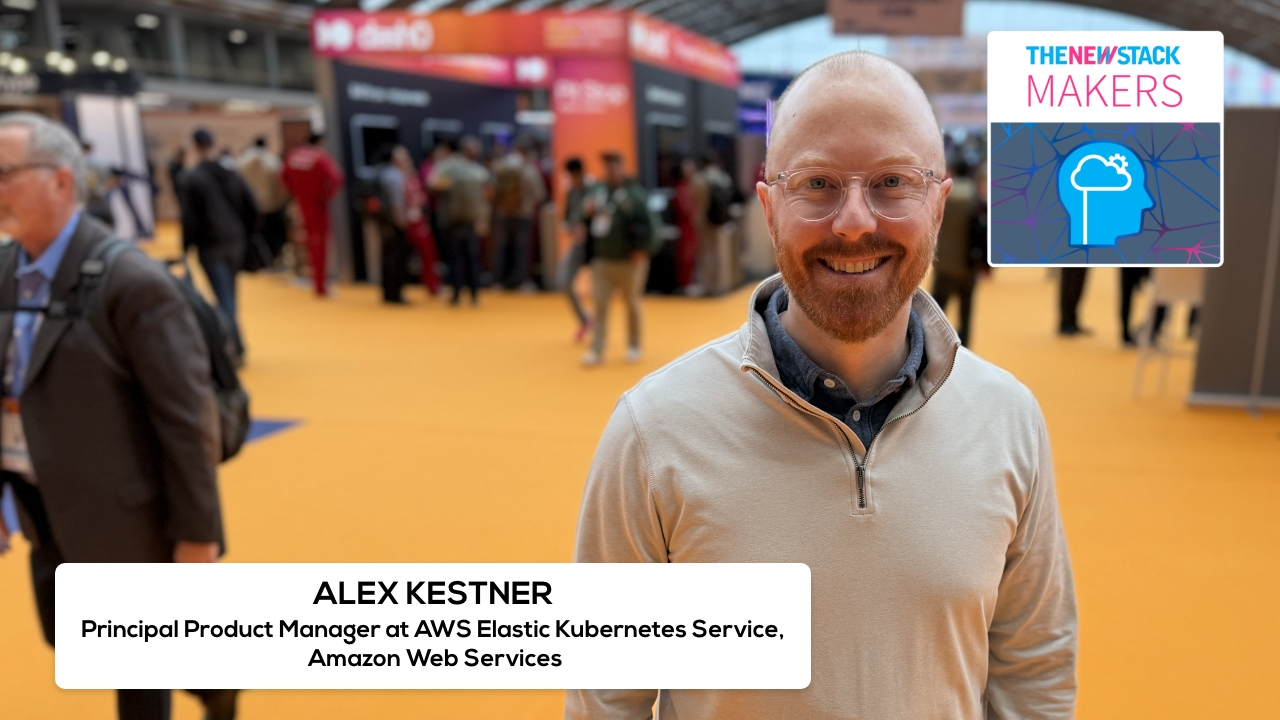
Alex Kestner, AWS EKS principal product manager, nailed it during his New Stack Makers chat in Amsterdam. Nodes? They’re the unglamorous backbone — spinning up, scaling, retiring — gobbling hours that could fuel innovation.
What Everyone Expected — And What AWS Delivered Instead
Hyperscalers love their moonshots. Google touts Anthos AI integrations; Azure pushes AKS GitOps. AWS could’ve chased that rabbit. Instead, EKS Auto Mode — unveiled at re:Invent 2024 — targets the boring bits. It automates the full node arc, leveraging Amazon EC2 Managed Instances (a collab with the EC2 crew) to offload ops outside the cluster.
No more babysitting add-ons like CNI plugins or kubelet upgrades. AWS runs that jazz externally. Result? Cleaner clusters, less drift. And it’s Karpenter-powered — that open-source scaler from AWS — right-sizing pods to cost-optimal instances on the fly.
But here’s my unique angle, one Kestner didn’t touch: this echoes the EC2 Auto Scaling revolution of 2009. Back then, VMs sprawled wildly; autoscaling tamed them, slashing idle capacity by 30-50% in early adopters (AWS data). Fast-forward — EKS Auto Mode could mirror that for K8s, potentially trimming Kubernetes tax (that 20-40% ops overhead, per DORA metrics) and unlocking $10B+ in enterprise value as AI workloads balloon.
Sharp prediction: watch non-tech giants — retail, finance — swarm this. They’ve dipped toes in K8s but recoiled at toil. Auto Mode lowers the bar.
Does AWS EKS Auto Mode Actually End Unpredictable Workloads?
Not quite. Kestner admits diversity rules: your ML training cluster won’t behave like a web app. Auto Mode shines on scaling and cost — Karpenter sniffs pod specs, hunts Spot Instances or Graviton chips for bargains. But compliance audits? Security postures? Those stay your headache.
It’s application-centric, yeah. Workloads declare needs; Auto Mode provisions behind the curtain. Early benchmarks? AWS hints at 20-30% cost wins versus manual tuning, aligning with Karpenter’s field trials (e.g., Intuit saved 50% on bursts).
And the mechanics — brutal simplicity. Launch Auto Mode in your EKS cluster; it spins EC2 Managed Instances automatically. No node groups to wrangle. Patching? AWS-owned. Upgrades? smoothly rollouts. This isn’t hype; it’s battle-tested from EKS’s 10-year grind, managing millions of clusters.
Skepticism creeps in, though. AWS PR spins it as “end to toil” — call that out. Toil mutates. Today it’s nodes; tomorrow, it’s multi-cluster federation or GitOps drift. Still, data backs the win: CNCF’s 2024 survey pegs ops as top K8s pain (52% of respondents). Auto Mode hacks that.
Three words: game. On. Ops.
Teams reclaim cycles. One Fortune 500 early tester (anonymous) reported 40% faster velocity post-Auto Mode — devs shipping features, not fighting YAML.
Why Does AWS EKS Auto Mode Matter for Platform Teams Right Now?
Market’s frothing. Kubernetes market hits $5B this year (Gartner), but ops friction caps it at 40% enterprise penetration. Enter Auto Mode: CNCF-aligned (shoutout to Kestner’s foundation ties), open standards baked in. No lock-in traps.
Compare rivals. GKE Autopilot abstracts nodes entirely — but it’s Google-only. AKS Virtual Nodes? Azure-centric. EKS Auto Mode plays nicer cross-cloud, thanks to Karpenter’s portability.
Bold critique: AWS isn’t reinventing wheels; they’re greasing them. That’s the Bloomberg lens — not sexy, but $$. With AI driving 10x compute spikes, cost optimization isn’t optional. Auto Mode delivers predictive scaling, dodging overprovisioning pitfalls that burn 35% of cloud bills (Flexera).
Wander a bit: remember serverless hype? Lambda killed servers — mostly. K8s won’t die, but Auto Mode nudges it serverless-adjacent, blurring lines for hybrid wins.
The Roadblocks — And How to Dodge Them
Not flawless. Spot Instance volatility? Mitigated, but present. Legacy workloads? Might choke on auto-scaling. Migration from managed node groups takes planning — AWS docs a 1-2 week lift for mid-size clusters.
My take? Prioritize bursty apps first. E-commerce spikes, CI/CD pipelines. Steady-state? Manual still edges on predictability.
Data point: Karpenter adopters see 37% Spot utilization jumps (AWS re:Post forums). Extrapolate — EKS Auto Mode could flip K8s from cost center to profit lever.
So, yeah. This isn’t vaporware. It’s toil’s quiet assassin.
🧬 Related Insights
- Read more: Kubernetes’ New LLM Stalker: OpenLIT Operator’s Zero-Code Snooping
- Read more: Python 3.13.10 Lands with 300 Fixes — Your Code’s New Best Friend
Frequently Asked Questions
What is AWS EKS Auto Mode?
AWS EKS Auto Mode automates Kubernetes node lifecycle — provisioning, scaling, patching — using EC2 Managed Instances and Karpenter for cost-smart scaling.
How does EKS Auto Mode reduce Kubernetes toil?
It offloads day-to-day ops like security updates and instance selection outside the cluster, freeing platform teams for business value.
Is AWS EKS Auto Mode worth switching for?
If node management eats your time and costs, yes — expect 20-40% savings, but test for your workloads first.
