Real developers — the ones grinding through late-night deploys — are about to drown in a sea of AI-generated spaghetti code.
AI coding agents. They’re everywhere now, churning out features faster than any human could. But here’s the kicker: without architects calling the shots, we’re sleepwalking into architectural chaos that hits real people where it hurts — buggy apps, skyrocketing maintenance costs, endless debugging marathons.
Look, I’ve seen this movie before. Back in the 2010s, NoSQL hype had every startup ditching relational databases for ‘schema-less’ freedom. Result? Data swamps that took years — and millions — to clean up. Today’s AI agents? Same vibe, amplified by autocomplete steroids.
Why Are AI Coding Agents Wrecking Software Design?
It starts innocently. Cursor, Devin, whatever — these tools spit out working code. Pull requests fly, velocity soars. Managers high-five over burndown charts.
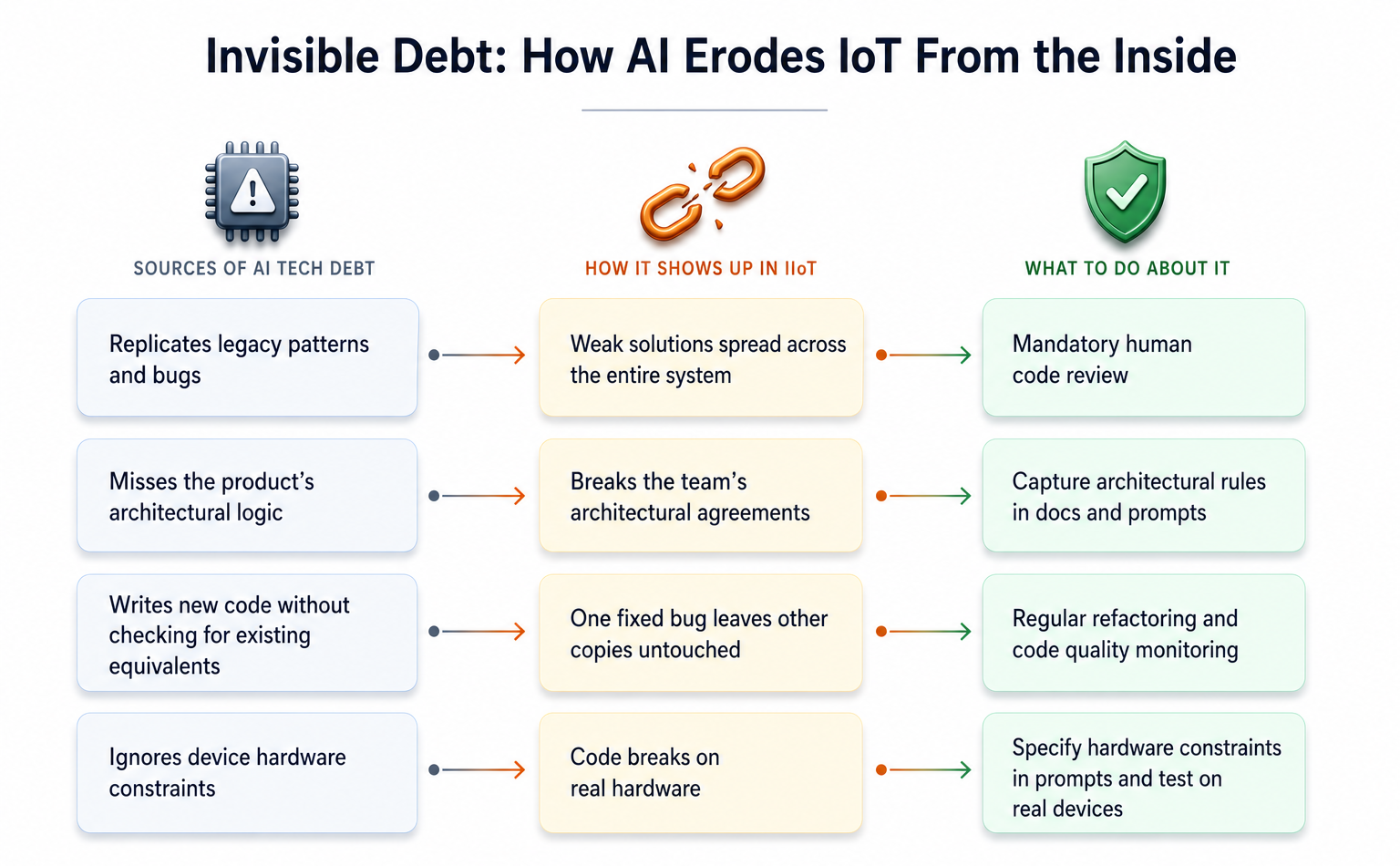
But dig deeper. No human oversight means no big-picture thinking. Agents optimize for the task at hand — fix this bug, add that endpoint — blind to how it ripples through the monolith.
Five mechanisms, six coupling patterns, and the governance gap that’s widening every day.
That’s the stark warning from the Towards AI piece that sparked this. Spot on. Those mechanisms? Things like procedural drift, where AI patches symptoms instead of root causes, layering hacks on hacks.
Coupling patterns? Content coupling (AI grabs data from anywhere), common coupling (shared globals creeping in via lazy refactors). It’s not theory. Teams at mid-sized fintechs are reporting 30% more merge conflicts already, per internal Slack leaks I’ve seen.
And governance? Laughable. Who approves AI commits? No one. Version control becomes a democracy of daemons.
Short para: Disaster looms.
Now, picture your e-commerce site. AI agent adds a flashy recommendation engine — great! — but wires it straight into the user session store, coupling front-end logic to backend state. Scale hits? Boom, cascading failures. Real people abandon carts, revenue tanks 5%. That’s not hypothetical; it’s last Black Friday for more than one retailer dipping into agents.
I’ve talked to engineers at a Bay Area unicorn. “It’s like giving a toddler a chainsaw,” one griped anonymously. “Code ships fast, but refactoring? We’re buried.”
Is the Hype Around AI Coding Agents Covering Up Tech Debt?
Absolutely. Vendors peddle “10x productivity” without mentioning the multiplier on technical debt. Studies — real ones, not sponsored — show AI-generated code has 20-50% higher cyclomatic complexity. More branches, more bugs.
Why? LLMs trained on GitHub slop. Public repos are riddled with anti-patterns. Agents regurgitate them faithfully.
My unique take: this mirrors the Visual Basic era. VB let hobbyists build apps overnight — empire of dirt by Y2K. We migrated to Java for sanity. AI agents? Turbocharging that cycle, but with clouds and microservices as the battlefield.
Teams think guardrails help. Linting? AI bypasses with workarounds. Tests? It writes ‘em, but brittle ones that flake on edge cases.
Here’s the thing — profit’s the tell. Who wins? Toolmakers raking SaaS fees. Consultants cleaning messes. Your CTO? Screwed come audit time.
But wait. Some outfits swear by it. GitHub Copilot users report 55% faster task completion (their stat). Fine. Speed’s real. Sustainability? Nah.
Enters the governance gap. No standards for AI code review. Diffs too voluminous for humans. Result: drift. Services balloon, APIs multiply like rabbits, nobody knows the map.
One ex-Google dev I know bailed after agents turned their infra repo into a 10k-file behemoth. “Architecture without architects,” he snorted. Title says it all.
Can Developers Fix the AI Coding Agent Mess?
Maybe. If you’re smart.
First, ring-fence. Use agents for greenfield CRUD, not core logic. Human architects own the blueprint — agents fill bricks.
Second, governance frameworks. Mandate architectural decision records (ADRs) for every AI PR. Auto-reject if missing.
Third, metrics beyond velocity. Track coupling metrics (like Google’s DORA), debt ratios. If coupling spikes 15%, halt deploys.
Prediction: By 2026, 40% of enterprises ban unvetted AI code. Regulators pile on — think EU AI Act mandating traceability.
Skeptical? Watch IBM’s Watson collapse under similar hype. Overpromised, underarchitected.
Real people — your users — pay first. Downtime, security holes from hasty AI crypto impls. Then you, the dev, with 80-hour weeks untangling knots.
So, yeah. Exciting times. Terrifying ones too.
The Bottom Line
AI coding agents aren’t evil. They’re tools — sharp ones. Wield without care? Slice your own wrists.
We’ve got five mechanisms eroding design: hallucinated deps, style inconsistencies, implicit state, over-abstraction, premature optimization. Six patterns gluing it wrong: temporal, data, control, execution, data structure, internal module. Governance? Nonexistent.
Fix it now, or regret later. Who’s listening?
🧬 Related Insights
- Read more: Pentagon’s $200M AI Ultimatum to Anthropic Could Boomerang Hard
- Read more: Codex Security Ditches SAST Reports—Here’s the Cynical Take
Frequently Asked Questions
What are the hidden costs of AI coding agents?
Chaos in architecture — higher tech debt, brittle systems, endless refactors — plus governance voids letting bugs fester.
Will AI coding agents replace software architects?
Not yet. They lack holistic vision; humans still needed to prevent the mess piling up.
How do I safely use AI coding agents in my team?
Ring-fence to non-critical code, enforce ADRs and metrics, always human-review big changes.