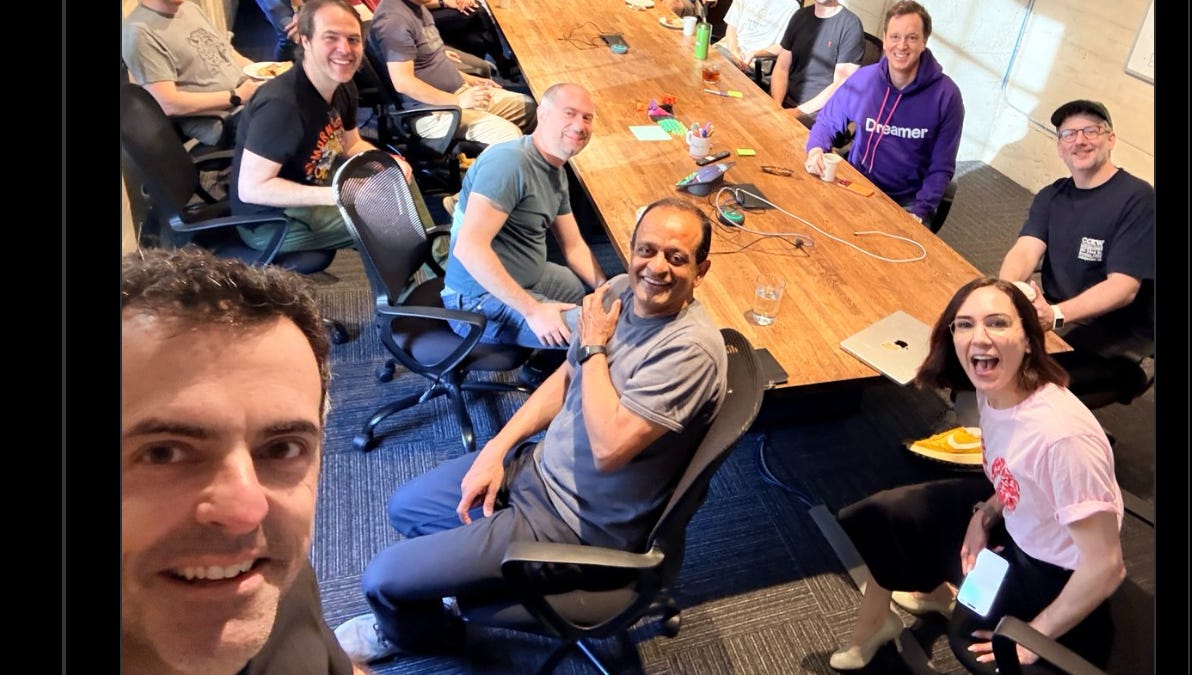
Imagine this: you’re drowning in emails, half-assed to-do lists, and that nagging voice saying life’s passing you by. Now Meta’s Superintelligence Labs swoops in, snatching Dreamer—the slick agent-of-agents startup—just 11 days after their big reveal. For real people, it means Zuck’s “personal superintelligence” fantasy isn’t vaporware anymore. It’s got teeth.
But here’s the thing. Nine months since Zuckerberg dropped his manifesto, preaching AI that “knows us deeply, understands our goals.” Sounds poetic. Too poetic?
Zuck’s Manifesto: Poetry or Pipe Dream?
Zuck laid it out back then, all earnest and visionary:
As profound as the abundance produced by AI may one day be, an even more meaningful impact on our lives will likely come from everyone having a personal superintelligence that helps you achieve your goals, create what you want to see in the world, experience any adventure, be a better friend to those you care about, and grow to become the person you aspire to be.
Nice words. But execuhiring Dreamer— that’s our term for licensing-plus-hiring, no full acquisition mess—shows they’re done talking. Dreamer’s Sidekick? It’s the poster child: an agent wrangling other agents, handling your messy life without you micromanaging.
We saw it in the walkthrough. Polished. Intuitive. The kind of tech that makes you think, “Finally, AI that doesn’t suck at real work.”
Execuhires move fast. Remember Manus? Meta dropped $2B on them in December, 10 days flat. Impressive video gen, sure, but Dreamer? That’s ecosystem play—OS-level smarts for consumer agents. Nat Friedman and Alex at MSL aren’t hiring vibes. They’re building an empire.
And us? Surprised but thrilled. Long slog to consumer AI without Zuck’s distribution muscle. Now Dreamer’s got it.
Why Poach Now? The Agent Wars Heat Up
Agents aren’t toys anymore. Anthropic’s Claude just grabbed your mouse—controlling macOS apps via Claude Cowork and Code. No laptop needed for grunt work, they say. Community’s buzzing: why didn’t Anthropic buy out agent stacks? Nah, they want the full loop.
Meanwhile, stacks converge. Hermes Agents, T3 Code with browser-terminal mashups, Command Center for parallel agent orchestras. Parchi for marathon workflows. It’s not codegen drudgery. It’s full automation.
But ops reality bites. Top models? Too eager, spawning weak subagents, turning parallelization into slop theater. Practitioners gripe: Claude’s computer use flakes out, GPT-5.2 Pro delegates dumbly. Winning? Products that trace, eval, iterate—not just spit code.
Meta smells blood. Combining Manus and Dreamer? Formidable consumer agent lab. Talent hunt’s on. Savvy founders, take note.
Prediction time—my unique twist nobody’s saying. This echoes Apple’s Newton flop in ‘93: ambitious PDA dreams, crashed on battery and UI. Zuck’s superintelligence? It’ll nail it where Newton failed—because models now grok intent like humans (mostly). Bold call: by 2027, Sidekick clones ship on Quest headsets, killing smartphones for creators. Your phone becomes dumb glass; AI’s the brain.
Laugh if you want. History rhymes.
Operational Bottlenecks: Where Agents Still Suck
Self-improving agents? Meta’s Hyperagents extend Darwin Gödel Machines—agents tweaking their own improvement loops. Transfers to coding, reviews, robotics. Cool. But hand-authored loops? Yesterday’s news.
Reality check. Models over-agentic, fragile in wild. Mikhail Parakhin nails it: production feedback loops win, not IQ flexes.
Dreamer fits perfect. It’s that “knows us deeply” bit—persistent, goal-aligned. Not some stateless chatbot.
Zuck’s spin? Corporate poetry masking hustle. They’re not saving humanity. They’re dominating consumer AI. Good for them. Better for us?
Maybe.
Shorter para. Agents evolve fast.
Is Meta’s Personal Superintelligence Hype or Here?
Trends scream yes. Less productivity drudge, more creating, connecting. Dreamer’s Sidekick embodies it—your butler for adventures, friendships, growth.
Skepticism lingers. MSL’s manifesto reeks of PR gloss. Nine months, multiple hires—momentum’s real, though.
Broader AI Twitter? Claude’s desktop grab shifts paradigms. No APIs needed. Full computer takeover.
Operational gripes persist: eagerness kills workflows. Solution? Closed loops with evals. LangSmith-style.
Meta’s stacking the deck. Dreamer + Manus = beast mode.
Here’s the acerbic truth: Zuck’s not your friend. He’s building moats. But damn if it won’t make life easier. Polish like Dreamer’s rare. Paired with Meta’s scale? Game over for fragmented agents.
Wander a sec—remember Siri? Meant to be superintelligent. Became joke. This? Different era.
Why Does This Matter for Everyday Users?
You. Me. Real people juggling chaos. Personal superintelligence isn’t sci-fi. It’s Sidekick booking trips, nurturing friendships, grinding goals—while you live.
Downsides? Privacy nightmares. Zuck knowing you deeply? Cue the ads. But opt for utility, stomach it.
Talent vacuum next. Friedman wants ecosystem kings. Predict: browser agents, long-run workflows. Register yours below.
Dense wrap: Agents mature from code monkeys to orchestrators. Parallel execution, but not slop. Feedback closes gaps. Meta leads charge.
🧬 Related Insights
- Read more: Google’s TurboQuant Squeezes LLMs Down 6x—But Who’s Buying the Hype?
- Read more: Holotron-12B Delivers 2x Agent Throughput on One H100 – NVIDIA’s Secret Weapon Emerges
Frequently Asked Questions
What is Dreamer AI and why did Meta hire them? Dreamer’s Sidekick is an agent-of-agents for personal tasks. Meta execuhired them for polish and ecosystem fit, accelerating superintelligence.
Will Meta’s personal superintelligence replace my smartphone? Possibly—predict Quest integration by 2027, making phones obsolete for AI-driven lives.
Is Zuck’s superintelligence vision realistic? Yes, with agent advances like Claude’s computer use. But ops hurdles remain; feedback loops key.