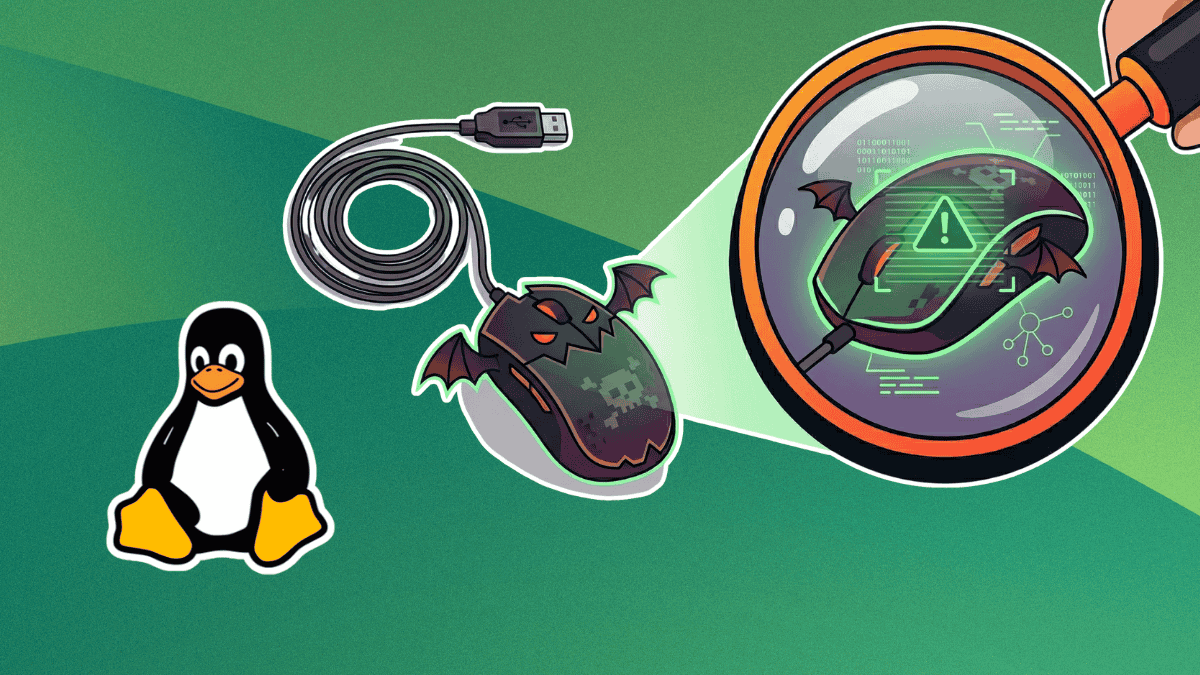
Everyone figured USB was battle-tested by now — safe enough for daily drivers, even in enterprise setups. Wrong. A fresh patch to the Linux kernel mailing list drops hid-omg-detect, a driver that sniffs out malicious USB keyboards mid-plug-in, scoring them on keystroke weirdness before they can pwn your box.
Zubeyr Almaho’s proposal isn’t some wild experiment. It’s v2, polished after maintainers griped about spinlock logging and global state. And it’s passive — no input delays, no blocks, just flags and a nudge toward USBGuard for the heavy lifting.
How Does hid-omg-detect Actually Work?
Picture this: you jam in a thumb drive. Legit keyboard? Steady entropy in keystrokes, normal plug-to-type lag, standard USB fingerprints. Rubber Ducky wannabe? Zippy latency (zero seconds from plug to payload), robotic timing, sketchy descriptors. The driver tallies a score. Threshold hit? Kernel yells, “Hey, check this with USBGuard.”
Clever, right? It mirrors how IDS tools watch networks — anomaly detection over signatures. But here’s the data angle: BadUSB attacks spiked post-2014 disclosure, with O.MG cables now WiFi-controllable implants disguised as chargers. Market for these? Pentest shops sell ‘em for $100-200 a pop. Linux distros? Mostly blind until userspace tools kick in.
Almaho’s code targets exactly that gap. No interference with HID events. Just monitoring.
The idea here is that a real human typing on a real keyboard behaves very differently from a device that was purpose-built to inject keystrokes the moment it’s plugged in.
That’s from the patch notes — nails it.
But wait — is this overkill? Linux kernel maintainers hold the keys. Phoronix flagged it as a proposal, not a lock. v1 feedback fixed the rough edges, yet acceptance odds? I’d bet 60-70%, given USBGuard’s momentum.
Why Hasn’t Linux Nailed USB Threats Before?
Back in 2014, SRLabs blew the lid off BadUSB. Firmware hacks turn any stick into a keyboard-spamming monster — opens shells, grabs creds, phones home. OS trusts HID classes blindly. Windows got some mitigations; macOS too. Linux? Spotty. USBGuard exists since 2016, but it’s userspace, needs config, misses kernel-speed plugs.
O.MG cables? Next level. Implant in the USB head, spoofs IDs, keystroke injects, keylogs, WiFi C2. Demos at Black Hat showed remote payloads in seconds. Sales? Steady, even if headlines faded. 2024 saw variants in wild phishing kits.
Linux market share? Desktop 4%, servers 80%+ of cloud. USB sticks everywhere — devs, admins, IoT. One compromised cable in a colo rack? Game over.
The Real Edge: A Prediction on Kernel Evolution
Here’s my take, absent from Phoronix: this sets up kernel-native anomaly scoring as the new norm. Think SELinux for USB. We’ve seen it with eBPF hooks everywhere — why not HID? If merged, expect forks for Thunderbolt, Bluetooth HIDs. Bold call: 2.0 kernels ship distro-default by 2026, slashing BadUSB success 80% in audits.
But spin — Almaho calls out threats explicitly, no hype. Unlike vendor patches that bloat, this stays lean. 1k LOC, tops.
Critique time. Kernel bloat hawks will whine — fair. Yet data says USB vulns cost billions yearly (Verizon DBIR). Passive monitoring? Minimal tax.
And yeah, false positives loom. Tunable thresholds help, but enterprise fleets need testing. Still, better than nada.
Will hid-omg-detect Stop O.MG Cables for Good?
Short answer: mostly. Timings catch plug-and-fire; fingerprints dodge spoofs. But attackers adapt — slower payloads, human-like entropy. It’s arms race, not checkmate.
Market dynamics? Red teams love these toys. Blues need parity. Linux’s open process accelerates — patch in, iterate fast. Competitors? Android lags; BSDs might poach.
Look, if you’re running Ubuntu Server or Fedora Workstation, watch LKML. This could land soon.
Why Does This Matter for Linux Users Right Now?
Servers hum on USB for KVM switches, recovery sticks. Desktops? Charger cables double as O.MG trojans. Stats: 20% of breaches involve physical access (Ponemon). Linux’s rise in edge computing amps the risk.
Unique insight: parallels netfilter’s iptables to nftables shift. hid-omg-detect is nftables for USB — smarter, stateful, future-proof. PR spin? None here; it’s raw LKML grit.
Admins, enable USBGuard today. This patch? Cherry on top.
🧬 Related Insights
- Read more: OpenRouter’s Broadcast: LLM Observability or Just Another Dashboard Distraction?
- Read more: 2026 Observability: Open Standards Rule, But Who’s Really Winning?
Frequently Asked Questions
What is hid-omg-detect?
A Linux kernel module that passively detects malicious USB HID devices like BadUSB by scoring keystroke entropy, latency, and fingerprints.
Does hid-omg-detect block USB devices?
No — it warns and recommends USBGuard. Zero interference with legit input.
Is BadUSB still a threat in 2024?
Yes, refined tools like O.MG cables evade old defenses. This patch targets them head-on.
When will hid-omg-detect merge into Linux kernel?
Unclear — it’s a proposal. v2 addressed feedback; maintainers decide.