Ever wonder if Big Tech’s AI obsession — pouring cash like it’s 1999 — will finally deliver the economic fireworks we’ve been promised?
AI predictions for 2026 paint a picture of relentless scaling, but don’t hold your breath for a productivity explosion. We’ve got 17 forecasts from sharp minds at Understanding AI, blending optimism on infrastructure with caution on real-world bang. Confidence scores hover high — 75% to 90% — signaling they’re not just guessing. Yet here’s the rub: rapid model tweaks won’t remake the economy overnight.
Take 2025’s frenzy. New models everywhere, coding agents in every dev toolkit, corporate checkbooks wide open. Waymo tripled rides, hit new cities driverless, even tackled freeways. Tesla’s robotaxis rolled out in Austin and SF. Momentum? Undeniable. But 2026? Steady grind, not singularity.
Will Big Tech’s Capex Crush $500 Billion?
Timothy B. Lee nails it first: hyperscalers — Google, Microsoft, Amazon, Meta, Oracle — spent $241B in 2024, barreling toward $400B this year. Apollo-level frenzy, highway-system scale. Bubble talk swirls. Unsustainable?
Nah. Zuckerberg and Nadella swear it’s demand-driven — Corporate America can’t get enough AI juice. Orders now, not sci-fi dreams. Lee’s call: $500B+ in 2026, 75% confident. Growth slows from 2025’s rocket, but climbs.
“Industry leaders like Mark Zuckerberg and Satya Nadella have said they aren’t building these data centers to prepare for speculative future demand — they’re just racing to keep up with orders their customers are placing right now.”
Smart money says yes. But my twist? Echoes the 1970s oil majors — Exxon, Shell dumping billions into rigs amid OPEC shocks. Capex soared (adjusted for inflation, $300B+ equivalent today), yet U.S. productivity flatlined into the ’80s. AI chips today, black gold then. Spending’s easy; returns? Trickier.
Growth here feels right. Cloud giants lock in AI moats. Customers hooked on agents automating grunt work. Still, watch power grids groan — data centers suck 10% of U.S. electricity by decade’s end, per some estimates.
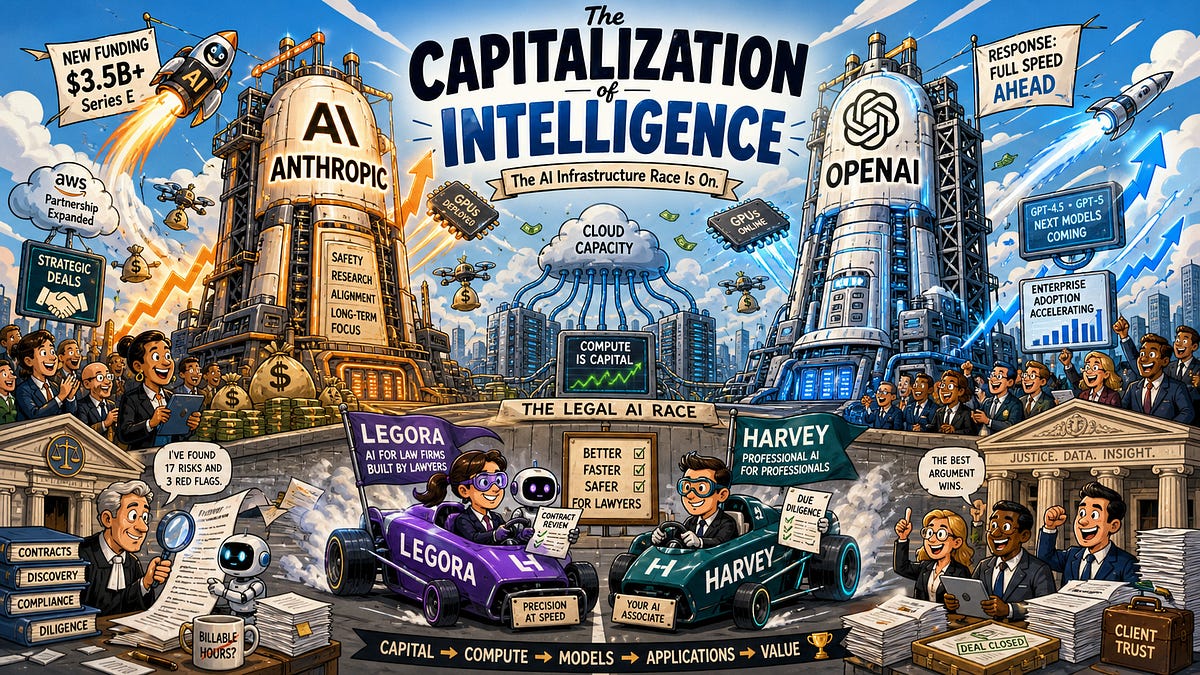
Can OpenAI and Anthropic Hit $30B and $15B Revenue?
Bold. OpenAI’s chasing $13B this year, ARR at $20B, targeting $30B in 2026. Anthropic? $4.7B now, ARR near $7B, gunning for $15B. Lee’s 80% sure they’ll nail it.
Why? Models got smarter fast — think GPT leaps. Businesses barely scratched automation surface. No AGI needed; current tools slash call-center hours, debug code overnight.
But. Enterprise sales cycles drag. CFOs love pilots, hate scaling bills. Competition bites — xAI, Grok, Mistral nibbling share. Hype meets reality: ChatGPT’s sticky for consumers, but B2B? Sticky pricing wars ahead.
They’re close. OpenAI’s moat: distribution via Microsoft. Anthropic’s edge: safety cred, Amazon backing. Double revenue? Plausible if economy hums.
Context Windows: Stuck at One Million Tokens?
Kai Williams bets 80% they’ll freeze. ChatGPT started at 8K tokens. Blasted to 128K, 200K, then Google’s 1M (later 2M). Now? Plateau. Claude steady since 2.1. GPT-5.2 at 400K, down from prior. Google’s back to 1M.
Transformers hit walls — quadratic compute costs kill mega-contexts. Cheaper, smaller windows win for most jobs. Codebases might push specialized LLMs bigger, but frontier generals? Nah.
Spot on. Needle-in-haystack tests expose flaws anyway. Retrieval-augmented generation (RAG) smarter than stuffing novels in prompts. 2026: efficiency over excess.
US GDP Growth Under 3.5%: The Modest Reality
Lee’s 90% lock: real GDP <3.5%. No Aschenbrenner-style 2027 takeoff. Models improve — sure — but diffusion lags. Like PCs in the ’80s: tech dazzled, economy yawned till ’90s suites.
2025’s AI wave? Nice, but not transformative yet. Self-driving nibbles logistics. Agents nibble white-collar. Full ripple? 2028+.
Here’s my unique poke: regulators loom larger than models. EU AI Act bites 2026, U.S. exec orders tighten chips. Biden’s crew (or Trump’s?) slaps export curbs harder on China. Innovation stalls not from silicon, but suits. Historical parallel? Post-WWII nuke tech — breakthroughs galore, but Cold War red tape slowed civilian spinouts for decades.
Why the Slow Burn Makes Sense
No bubble pop. No AGI sprint. Just grind: capex funds the farms, revenues prove demand, tech plateaus tactically, GDP tiptoes up.
Skepticism? Baked in. Understanding AI’s crew avoids hype — calls out modest impacts amid model races. Corporate investment explodes, yet “real-world economic impacts will be modest.”
But drill down. Robotaxis scale — Waymo’s tripling hints fleets hit millions rides weekly. Coding agents? GitHub Copilot’s 1M+ paid seats today; 10x by 2026? Dev productivity jumps 20-30%, per studies.
Risks lurk. Energy crunches. Talent wars. If capex overshoots demand — say, recession hits — markdowns savage stocks. Meta’s already pivoting VR cash to AI; what if returns flop?
What Happens to Self-Driving in 2026?
Unmentioned much, but 2025’s wins scream sequel. Waymo expands. Tesla iterates FSD. Cruise rebounds? Zoox?
Prediction: robotaxi miles triple again. Austin-SF today; nationwide pilots by year-end. Regs ease in red states. Economics tip: $0.30/mile vs. $1 human driver. Fleets profitable at scale.
Yet crashes headline. Public trust fragile — one viral Waymo mishap tanks adoption.
The Bigger Market Play
AI’s not solitaire. Edges biotech (AlphaFold drugs), defense (drones), media (Sora clips). $500B capex? Funds it all.
My bold call: by 2026 Q4, sovereign funds pile in — Saudi PIF, Norway’s oil cash chasing yields. Geopolitics heats; U.S. leads, but Huawei lurks with domestic silicon.
Steady wins. Hype cycles crest, but infrastructure locks value.
🧬 Related Insights
- Read more: ServiceHub: The Free Tool Ending 2 AM Azure Service Bus DLQ Panics
- Read more: Beautiful.ai’s $45M Bet: How AI Presentation Tools Are Reshaping the Productivity Stack
Frequently Asked Questions
What are the top AI predictions for 2026?
Big Tech capex over $500B, OpenAI/Anthropic hit revenue targets, context windows stall at 1M tokens, US GDP under 3.5%.
Will AI boost US GDP growth in 2026?
Modestly — under 3.5%. Model gains real, but economic diffusion slow, like PCs in the 1980s.
Is Big Tech’s AI spending sustainable?
Yes, demand-driven per CEOs. But energy and returns risks loom large.